Product family / TSC Simulation
Interactive Virtual Plants.
Owned the development of five Unity-based industrial process-training environments, connecting dynamic simulation, field equipment and control-room operation with TSC’s simulation and internal 3D teams.
Loads YouTube only when you press play. Watch on YouTube ↗
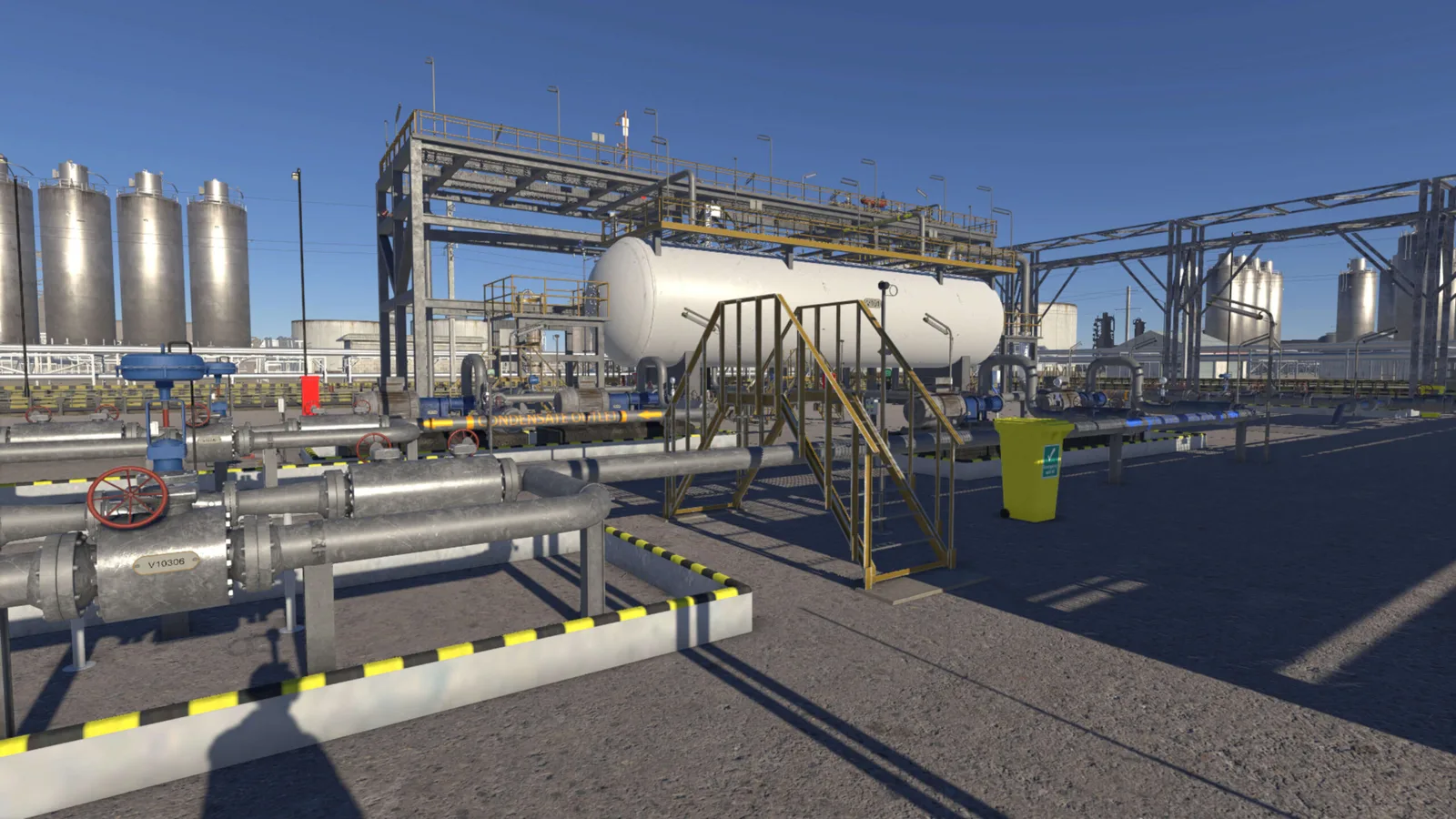
Three Phase Separator vessel and access platforms in TSC’s interactive plant environment. · Image: TSC Simulation ↗
One process, two perspectives
A field operator sees equipment, valves and local instruments. A control-room operator sees the same process through its controls and trends. Interactive Virtual Plants connect those perspectives through a Unity environment linked to first-principles dynamic simulation.
The family covers separation, electrolysis, storage, pipeline operation and compression. Equipment interactions affect the process; instructor faults, scenarios and assessments give the session a purpose. The sections below explain the engineering context of each model.
My contribution across the family
As Product Owner and solution architect, I connected customer requirements and product priorities with the simulation, Unity/3D, control-room and delivery aspects of the system. My responsibilities included solution definition, technical and commercial proposals, demonstrations and planning delivery with the contributing teams.
I also led TSC’s 3D Studio: setting priorities, allocating resources, mentoring and recruiting. That combined product ownership with the practical work of coordinating engineers and 3D developers across concurrent projects.
My earlier simulation-engineering work in thermodynamics, hydraulic modelling and compressor behaviour provided the engineering foundation for that role. The products themselves were team deliveries at TSC.
Hardware and visualisation
Each linked model page lists Windows PC, AWS cloud delivery, Meta Quest PC VR and PICO PC VR. Here, PC VR means a headset connected to a PC, rather than a native standalone application.
We also used triple-screen and IglooVision immersive displays within the wider family, taking the experience from a desktop field view to shared-room visualisation. I’ve listed those configurations at range level because the display setup varied between models and installations.
Internal studio development
In July 2018 we established TSC’s internal 3D Studio. The in-house Unity IVP development project began in September 2018 and covers the simulator, OPC integration, requirements and technical oversight behind the newer product family.
The earlier EON Reality IVP project has its own development history, simulation examples and media gallery. It preceded the internal Unity products shown on this page.
Across the IVPs, I owned decisions on process layout, control philosophy, operations, simulation dynamics, documentation, assessments, fault scenarios, training delivery and platform support.
The product family
Five processes. A shared training environment.
Loads YouTube only when you press play. Watch on YouTube ↗
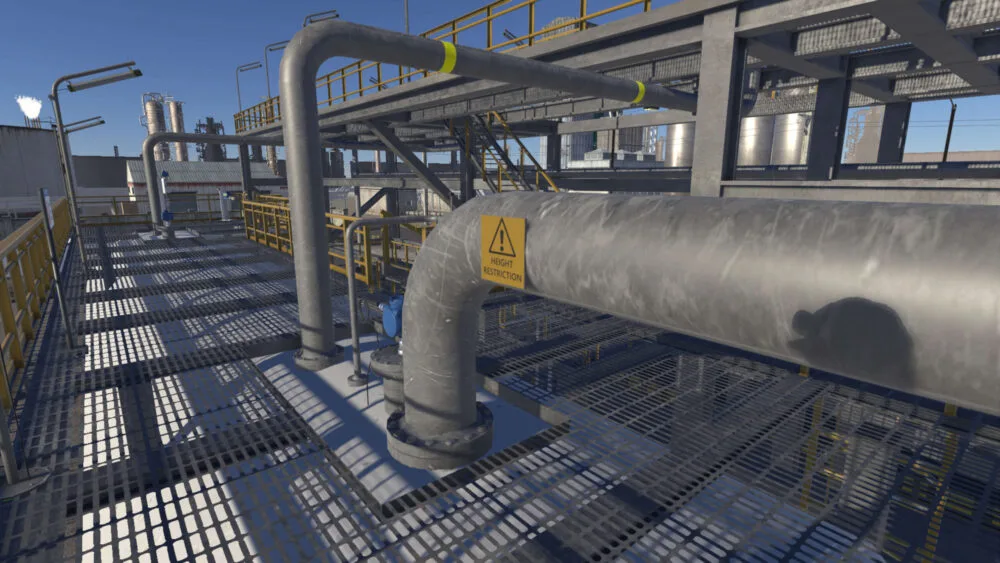
Three Phase Separator vessel, access stairs and process pipework in the virtual plant. · Image: TSC Simulation ↗
More views
Unity · Dynamic simulation · Cascade level control · Emergency shutdown
01 / SIM 8000
Three Phase Separator
Product ownership connecting separation behaviour and level control with the equipment a field operator sees and uses.
Separation and level control
Crude feed separates into gas, oil and produced water. Gas leaves through pressure control; a weir separates the liquid sections, with cascade level/flow loops managing the water interface and oil inventory. Duty/standby pumps move the liquid products onward.
Field and control-room operation
Local valves and sight glasses connect the 3D field view to the control-room display. Startup, shutdown, pump changeovers and fault scenarios bring process response together with operator communication. The model also includes emergency shutdown, blowdown and pressure relief.
Published platforms
Loads YouTube only when you press play. Watch on YouTube ↗
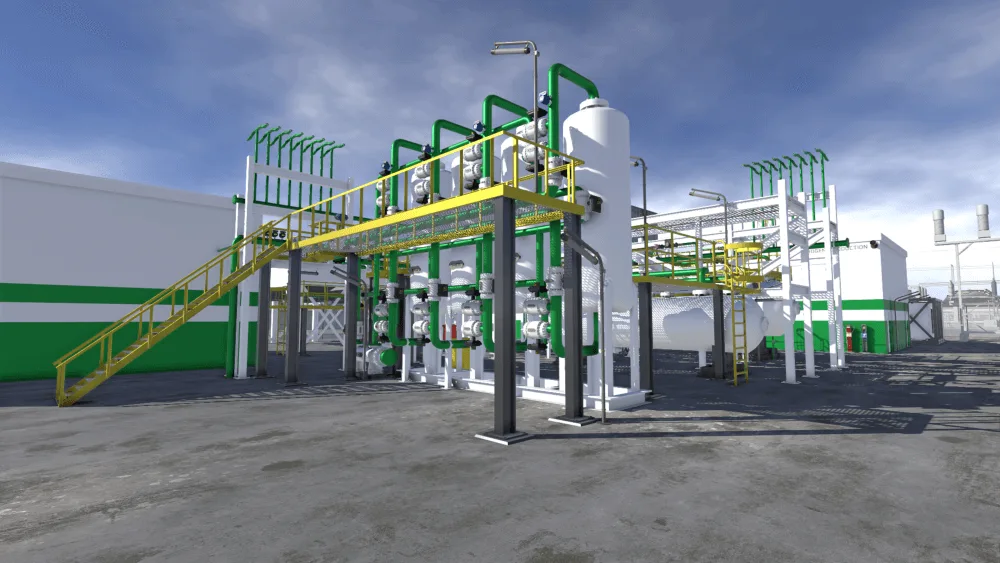
Electrolysis equipment, pipework and access platforms in the green hydrogen virtual plant. · Image: TSC Simulation ↗
Unity · Dynamic simulation · PEM electrolysis · Process utilities
02 / SIM 8040
Green Hydrogen Production
Worked on the process design and training behaviour of a PEM electrolysis model, connecting electrical supply, water circulation and gas treatment.
From electricity to hydrogen
The published model represents an 18 MW plant with 16 electrolysis stacks. Electricity drives the splitting of demineralised water into hydrogen and oxygen, alongside circulating-water cooling, gas/liquid separation and hydrogen drying. Transformers and rectifiers connect the electrical supply to the stacks.
Operating the electrolysis plant
The 3D plant makes the relationship between electrochemistry and supporting equipment visible. Operating exercises cover startup and shutdown, stack behaviour and the influence of electrical conditions on production. The model also provides context for the economics of renewable-powered hydrogen.
Published platforms
Loads YouTube only when you press play. Watch on YouTube ↗
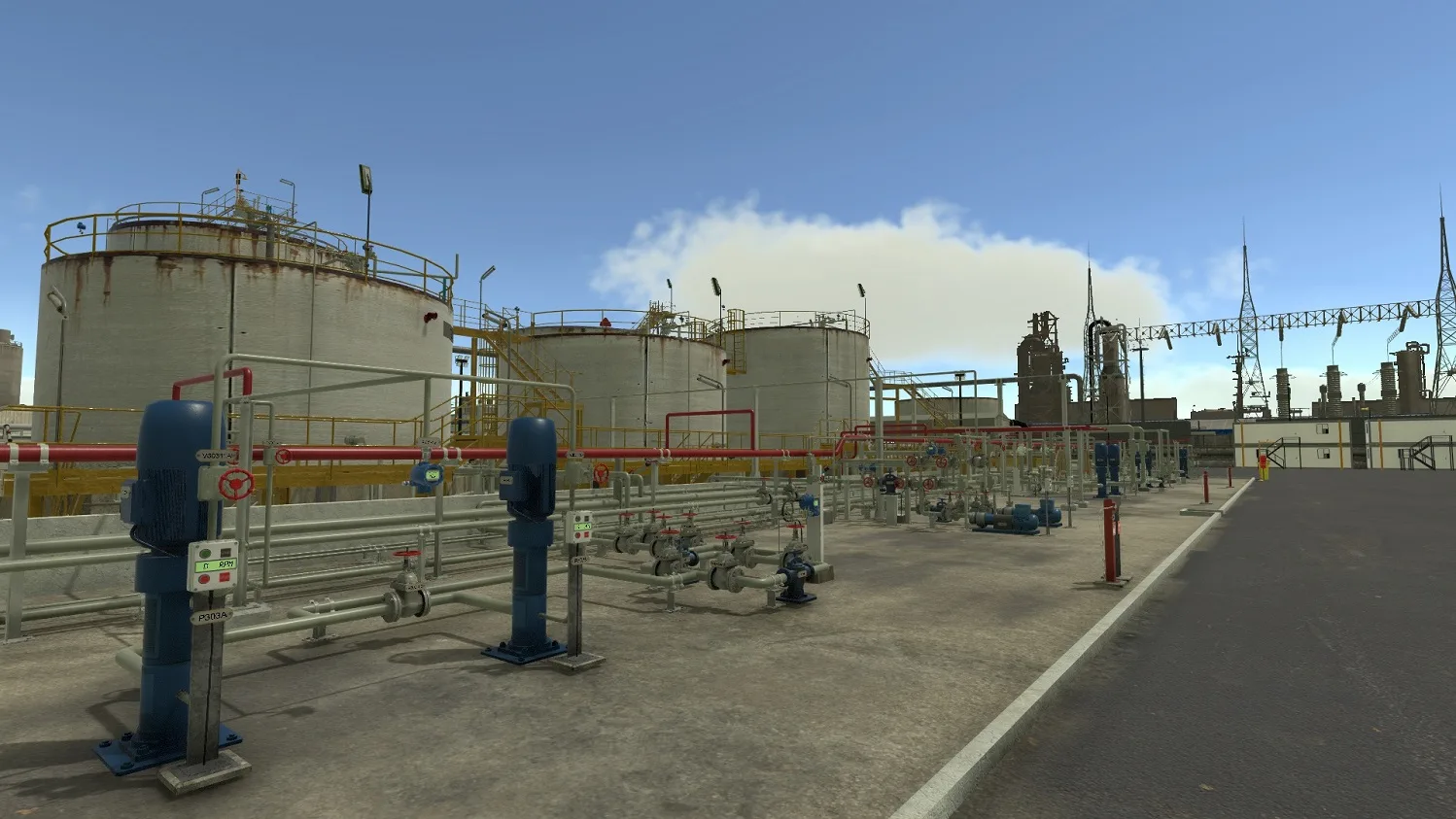
Storage tanks and transfer pipework in the Condensate Tank Farm environment. · Image: TSC Simulation ↗
Unity · Dynamic simulation · Storage operations · Flow routing
03 / SIM 8020
Condensate Tank Farm
Shaped a condensate-storage training model around tank selection, liquid separation and the valve line-ups that route each stream.
Storage, separation and transfer
Based on part of a Southern North Sea gas-receiving facility, this model handles stabilised and unstabilised condensate containing water and methanol. Fixed- and floating-roof tanks have different duties; separation within the tanks and gas blanketing add further operating considerations.
Managing inventory and routing
Operators work through a flexible pipe-and-valve network to route stored liquids towards tanker loading, an onsite vessel or an export pipeline. The emphasis is on line-ups, blending, inventory and balancing incoming and outgoing flows. Field/control-room coordination matters because the correct destination depends on both the plant state and the valve configuration.
Published platforms
Loads YouTube only when you press play. Watch on YouTube ↗
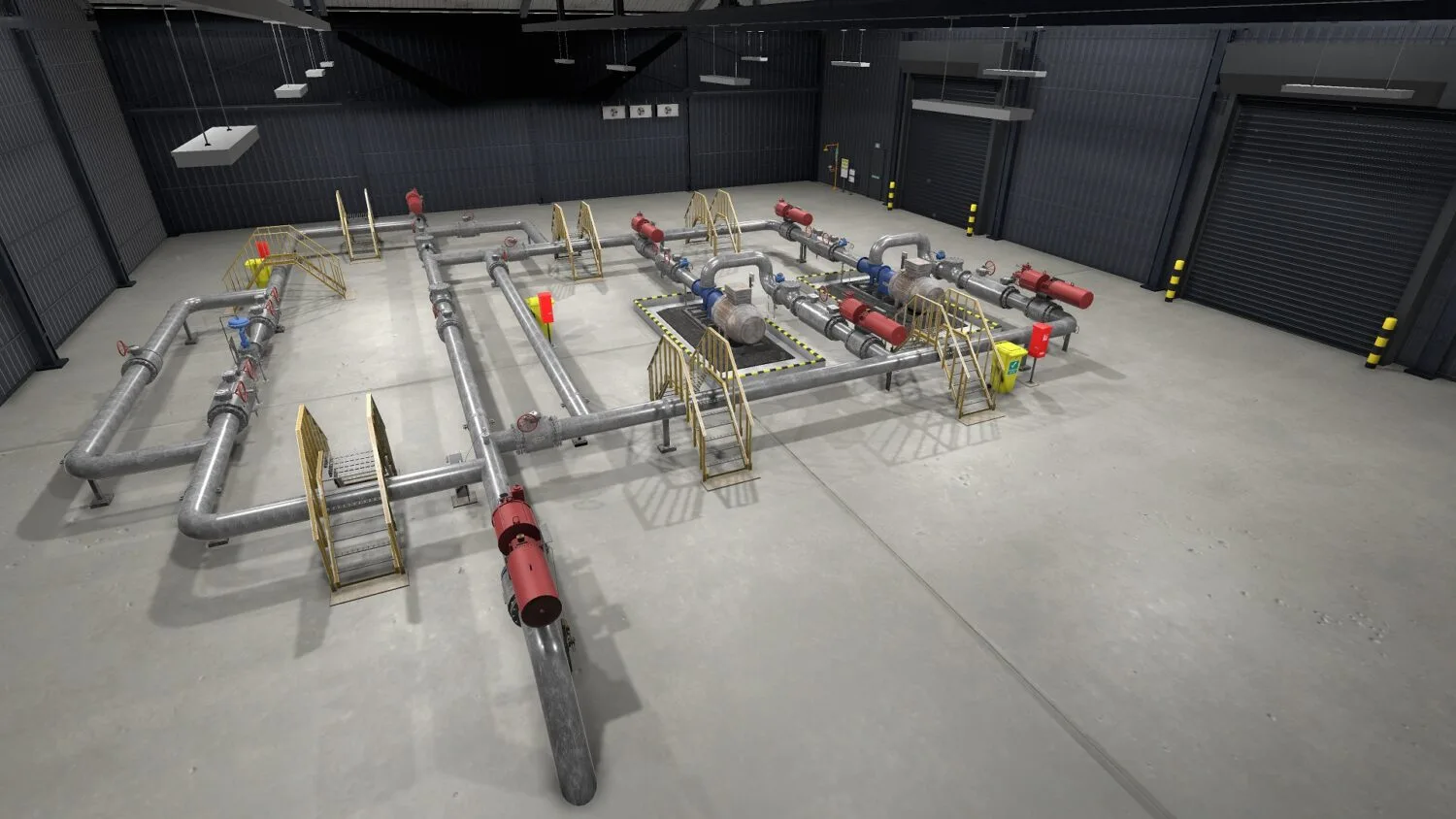
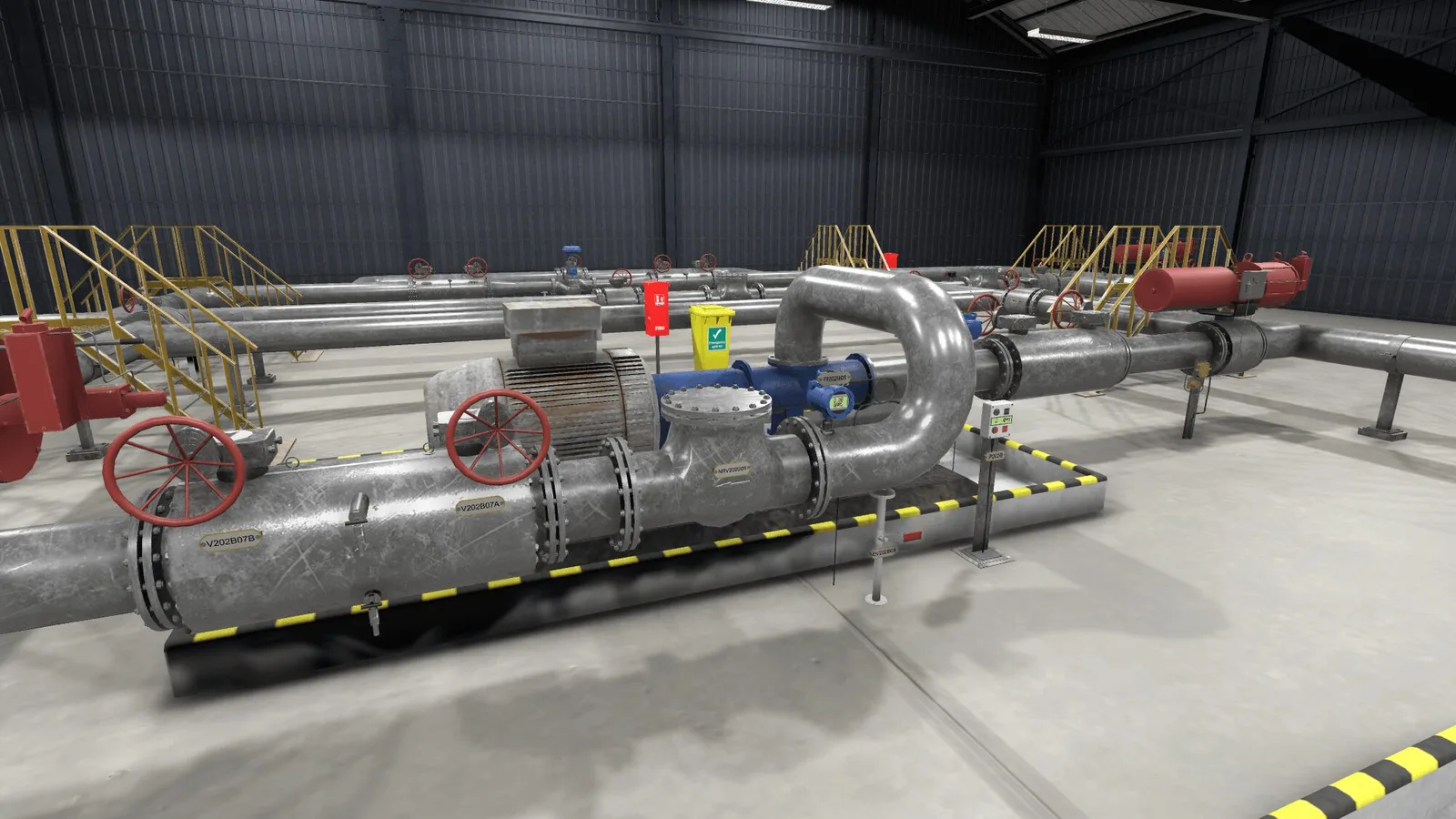
Overhead view of the pipeline model’s pig launcher, receiver and connected pipework. · Image: TSC Simulation ↗
More views
Unity · Dynamic simulation · Pipeline hydraulics · Meter proving
04 / SIM 8030
Liquid Pipeline & Pigging
Worked on a pipeline training environment connecting pumping and metering with pig movement through booster stations and coordinated field operations.
Pumps, metering and pig movement
Oil passes through duty/standby pumping, a metering section and three pipeline sections connected by two booster stations. A launcher and receiver support pigging: sending an inspection or cleaning device through a pipeline. In this model, pig movement responds to flow velocity and pressure.
Coordinating a pipeline operation
The exercise connects field operations with the continuing operation of the line. Routing must be managed as the pig passes through booster stations and reaches the receiver. Meter proving, pump changeovers and control-room communication provide additional operating context.
Published platforms
Loads YouTube only when you press play. Watch on YouTube ↗
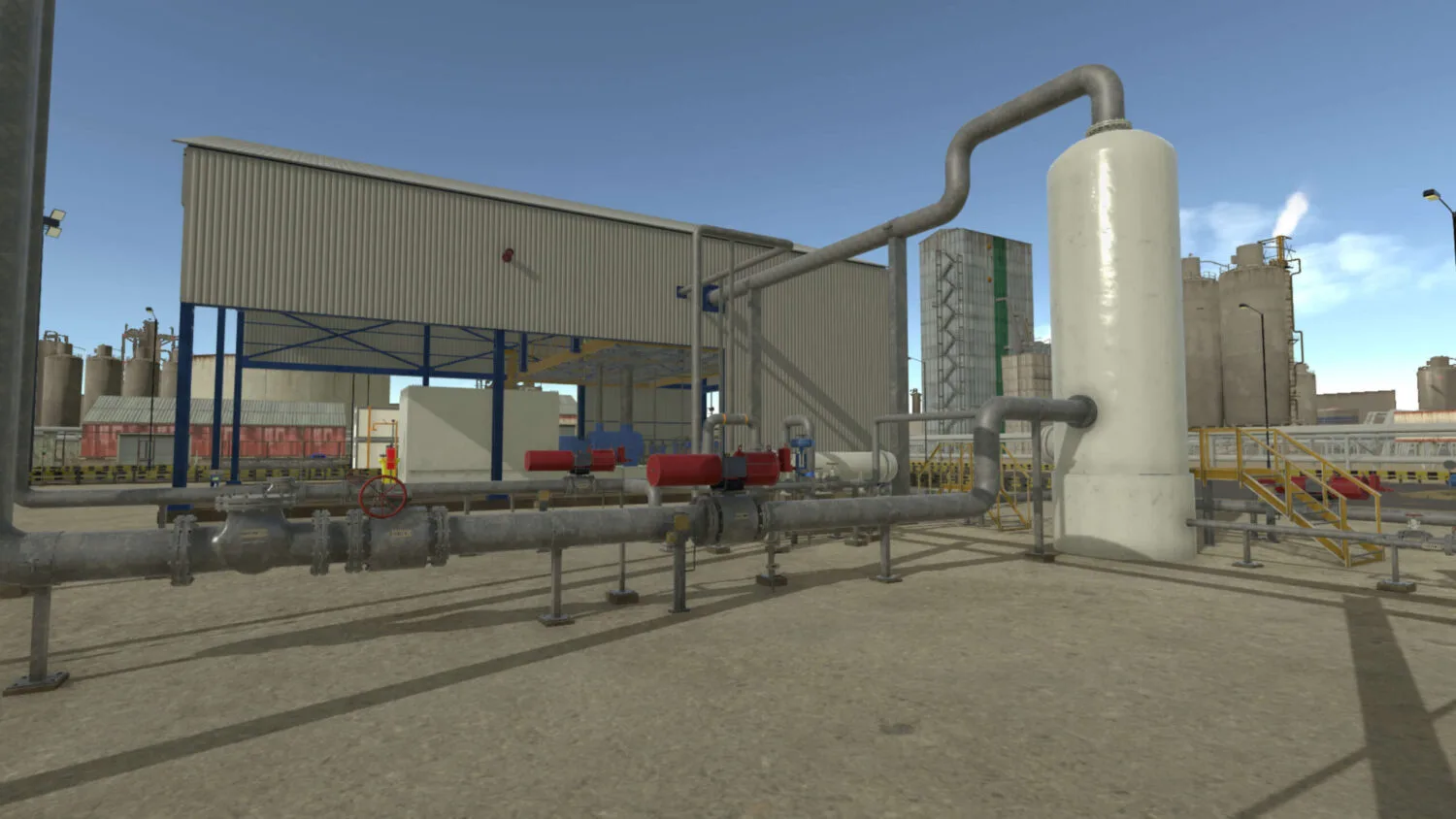
Compressor-building exterior, process vessel and gas pipework in the virtual plant. · Image: TSC Simulation ↗
Unity · Dynamic simulation · Anti-surge control · Machinery utilities
05 / SIM 8010
Centrifugal Compressor
Product ownership across the process and control behaviour of a gas-compression training package, linking the compressor, anti-surge controls and supporting utilities.
The compressor and its utilities
The model represents a single-stage, 5.5 MW natural-gas compressor with a suction knockout drum and an aftercooler. Lubrication and seal-oil systems, vibration monitoring, shutdown and blowdown sit alongside the main gas path. Speed and anti-surge controls shape the package’s response.
Relating controls to machinery behaviour
Compressor curves and operating conditions link process theory to the control-room view. In the field environment, a local panel and sight glasses support startup, shutdown and equipment checks. The combination shows why the auxiliary systems matter as much as the compressor itself.
Published platforms
Development & delivery
Related projects
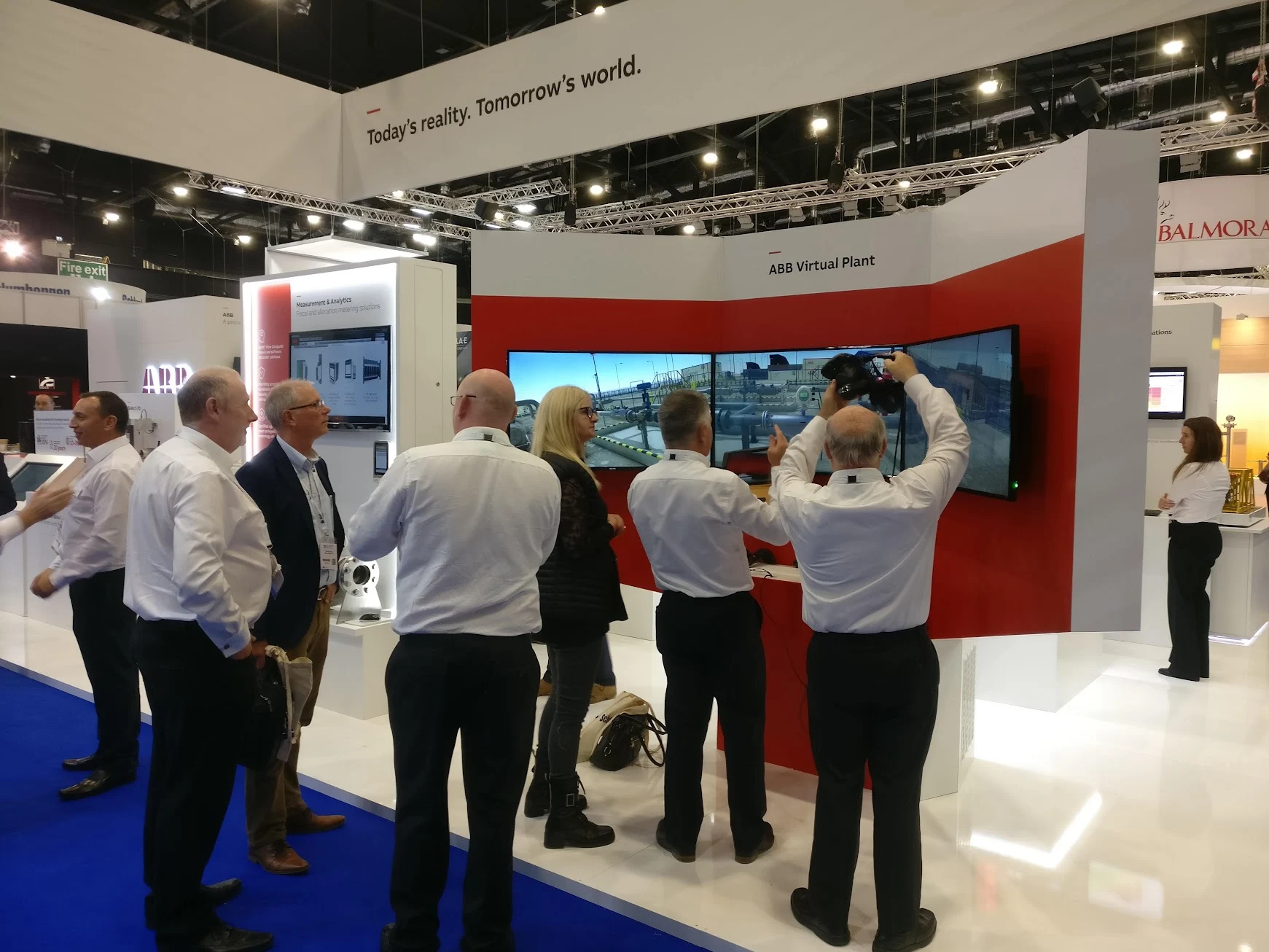 Client projectEvent photograph supplied by Luke Johnson
Oil and gas / Immersive learning
ABB at Offshore Europe 2019
Led an immersive ABB exhibition project connecting a multiplayer virtual plant, System 800xA and HTC Vive VR, with a live fault-finding competition at Offshore Europe 2019.
 Internal developmentTSC Simulation; YouTube video thumbnail
Oil and gas / Education and training
Portable Training System — Design & Build
Turned BP’s portability challenge into a self-contained training system with a folding triple-screen display, networked operator and instructor stations, and custom flight cases; designed and built with Harry Wright at TSC.
 Client projectTSC Simulation; video screenshot supplied by Luke Johnson, with player overlays removed
Oil and gas / Operator training
BP Oman — Portable System Training Trial
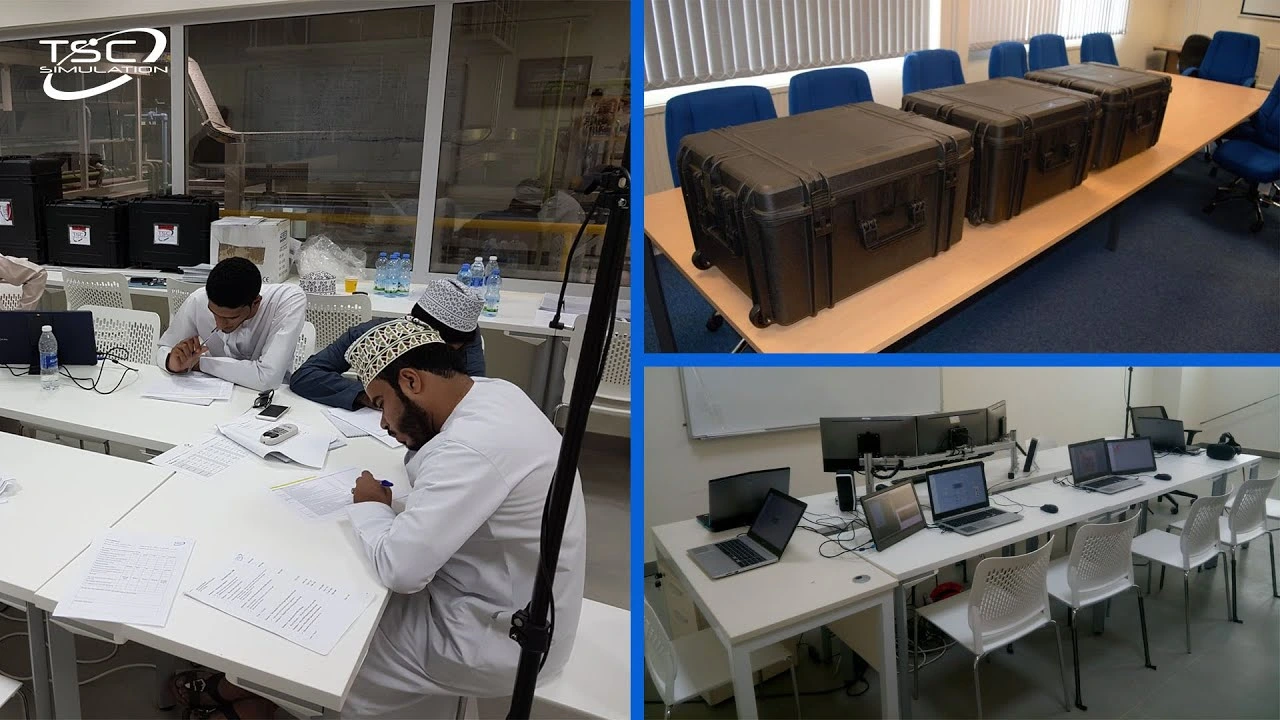
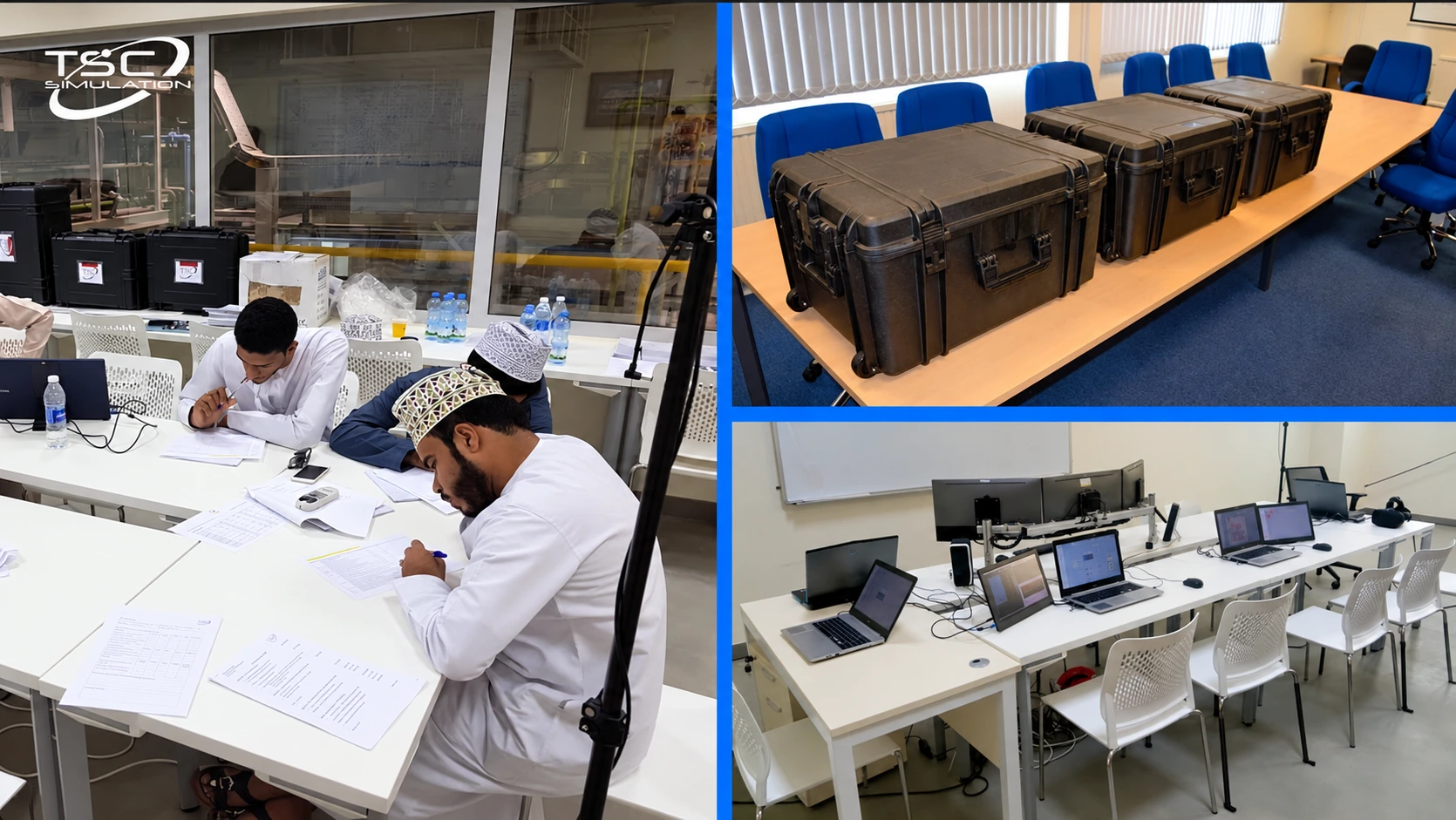
Took TSC’s newly built portable training system to Oman in September 2018 for a successful trial at the TPO Petrofac training centre, spending three weeks training new BP oil and gas recruits as one of two TSC trainers.
 Internal developmentEON Reality, via Auganix
Operator training / Immersive learning
EON Reality IVP Creation
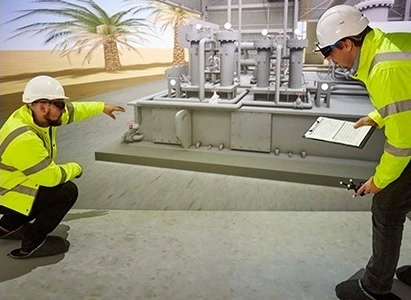
Owned the engineering and product definition of TSC’s EON-based Virtual Plants: built the process simulator, devised all synchronisation logic and specified the process, learning objectives and 3D behaviour for EON’s technical artists.
Internal developmentImage: TSC SimulationOperator training / Immersive learning
In-house Unity IVP Development
Helped lead the replacement of our EON-based products with Unity versions after the agreement ended and we could no longer maintain the original products.
Further context
Technical references and related project information.