Internal development / TSC Simulation
Portable Training System — Design & Build.
Turned BP’s portability challenge into a self-contained training system with a folding triple-screen display, networked operator and instructor stations, and custom flight cases; designed and built with Harry Wright at TSC.
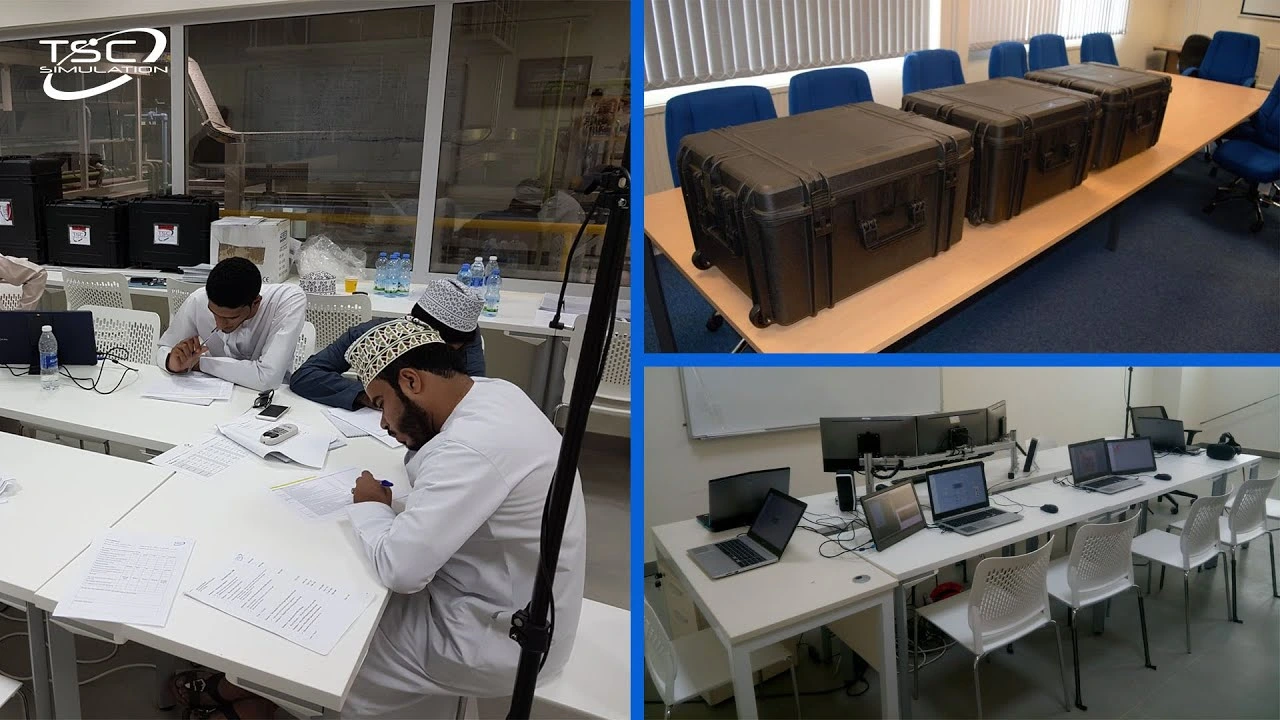
Loads YouTube only when you press play. Watch on YouTube ↗
Portable training system video thumbnail showing a training session, protective flight cases and the assembled laptop and triple-screen classroom setup. · TSC Simulation; YouTube video thumbnail ↗
Situation
BP asked TSC whether we could make our immersive training system portable. Until then, we had used Igloos and fixed installations. The request was to fit a complete, self-contained, multi-user training system into protective flight cases so trainers could take it around the world.
The customer specifically requested a triple-screen surround solution. Headset-based VR was still an area of early experimentation for us, and we explored it during the project alongside the requested screen-based delivery.
The starting point was TSC’s established Virtual Control Room (VCR) approach, which I had worked on previously: a shared training exercise connecting field operators, control-room operators and an instructor. I carried those capabilities into a portable system and later owned many of TSC’s display implementations and projects as head of 3D.
Task
As project lead, project engineer and solution architect, I was responsible for turning BP’s request into a practical portable training system. I worked with my colleague Harry Wright on the design and build at TSC’s offices between March and July 2018.
The system had to be quick to assemble, with good monitor alignment straight out of its cases. It also had to retain multi-user, multi-station and multi-room operation without an internet connection or access to the venue’s Wi-Fi.
| Component | Purpose |
|---|---|
| Triple-screen surround display and folding stand | Immersive view of the 3D plant for the field-operator role. |
| 3D laptop and Xbox controller | Run and navigate the virtual environment. |
| Two trainee control-room operator laptops | Provide separate operator stations, each with a lightweight second screen. |
| Instructor laptop and lightweight second screen | Manage sessions and inject faults. |
| Dedicated Wi-Fi hub and wireless connectivity | Connect the stations through the system’s own local network. |
| Power adapters, radios and phones | Support the equipment and communication between training roles. |
| Protective flight cases with custom foam | Transport the complete system or selected parts of it. |
The project’s packing constraint was a maximum of 32 kg per bag. Modularity mattered too: trainers needed to be able to take the complete system, the control-room equipment alone, or just the 3D setup.
Action
Designing a stand we could fold, pack and realign
I began by searching for a suitable triple-screen solution. Nothing I found met the combination of portability, fast setup and alignment we needed. Harry and I looked at ideas from sim-racing rigs, flight simulators and industrial computing, then designed our own.
We built a desk-mounted stand from aluminium extrusion that folded in half and used quick-release monitor mounts. The stand made the screen arrangement repeatable while allowing the monitors to be removed for transport.
We selected thin-bezel Dell monitors with DisplayPort daisy chaining. This reduced the wiring needed at setup and let the 3D laptop drive the surround display from a single Mini DisplayPort output.
Before committing to metalwork, we designed the extrusion connection brackets in 2D CAD, cut them out and built a full MDF mockup. That let us check the assembly before paying for laser cutting. Once the design was ready, a third-party supplier laser-cut the final parts.
Connecting the training stations without venue infrastructure
I configured the system around its own supplied Wi-Fi hub, giving the laptops a local network independent of the venue. The training stations could communicate with one another without internet access or reliance on a customer’s wireless infrastructure, preserving the shared-session capabilities of the fixed VCR and Igloo systems.
Protecting the equipment and making the packing modular
I distributed the equipment across cases around the 32 kg single-bag constraint, while keeping the control-room and 3D parts usable as separate travel configurations.
For the cases, we worked with Trifibre in Leicester. We supplied CAD in the format they required, and they machined the custom foam inserts and supplied the cases. The packing design brought equipment protection, airline handling and the option to travel with only part of the system into the same engineering problem.
TSC’s display-technologies page describes the resulting Portable Virtual Control Room arrangement, including operator and instructor stations, a 3D field station, a triple-screen stand, custom cases and an independent network.
Bringing the virtual plant into the portable system
The photographs show the EON centrifugal compressor environment and simulation on the surround display, alongside the transport cases and a classroom setup. Further environment, local-control and simulation screenshots are included below.
The EON Reality project covers the underlying virtual plant development. The Interactive Virtual Plants overview describes the wider product family.
Result
We completed the portable system build in July 2018, turning the fixed-installation training approach into a self-contained package with a folding surround display, networked training stations and protective cases.
We completed the build and TSC was then asked to take it to Oman in September 2018 as a trial for BP operator training at the newly built TPO Petrofac training centre. I was one of two TSC trainers and spent three weeks training new oil and gas recruits. The visit was successful; it is covered separately in the Oman portable-system training project.
After we returned, the system was eventually delivered to BP in Baku with the Siemens COMOS Walkinside proof-of-concept collaboration project on it. That delivery has its own BP Baku and Walkinside project page, ready for its dates and fuller scope to be added.
My contribution extended beyond building the equipment. Through sustained customer communication, I helped turn an ad hoc question — “Can you make it portable?” — into a design project, an overseas training trial and subsequent delivery work.
Equipment & operating context
A closer look.
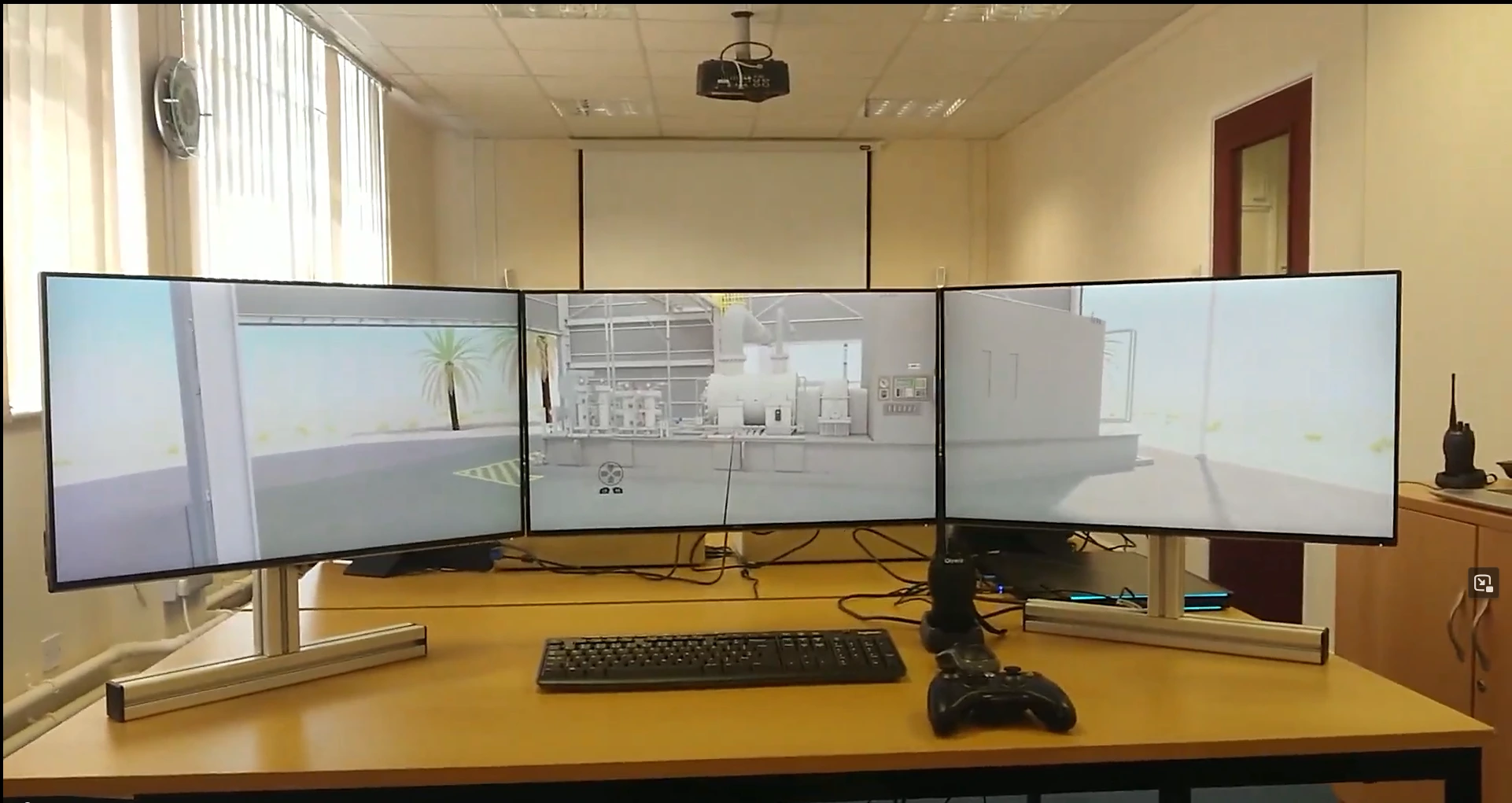
The portable system running the EON centrifugal compressor environment and simulation across three surround screens.
Image supplied by Luke Johnson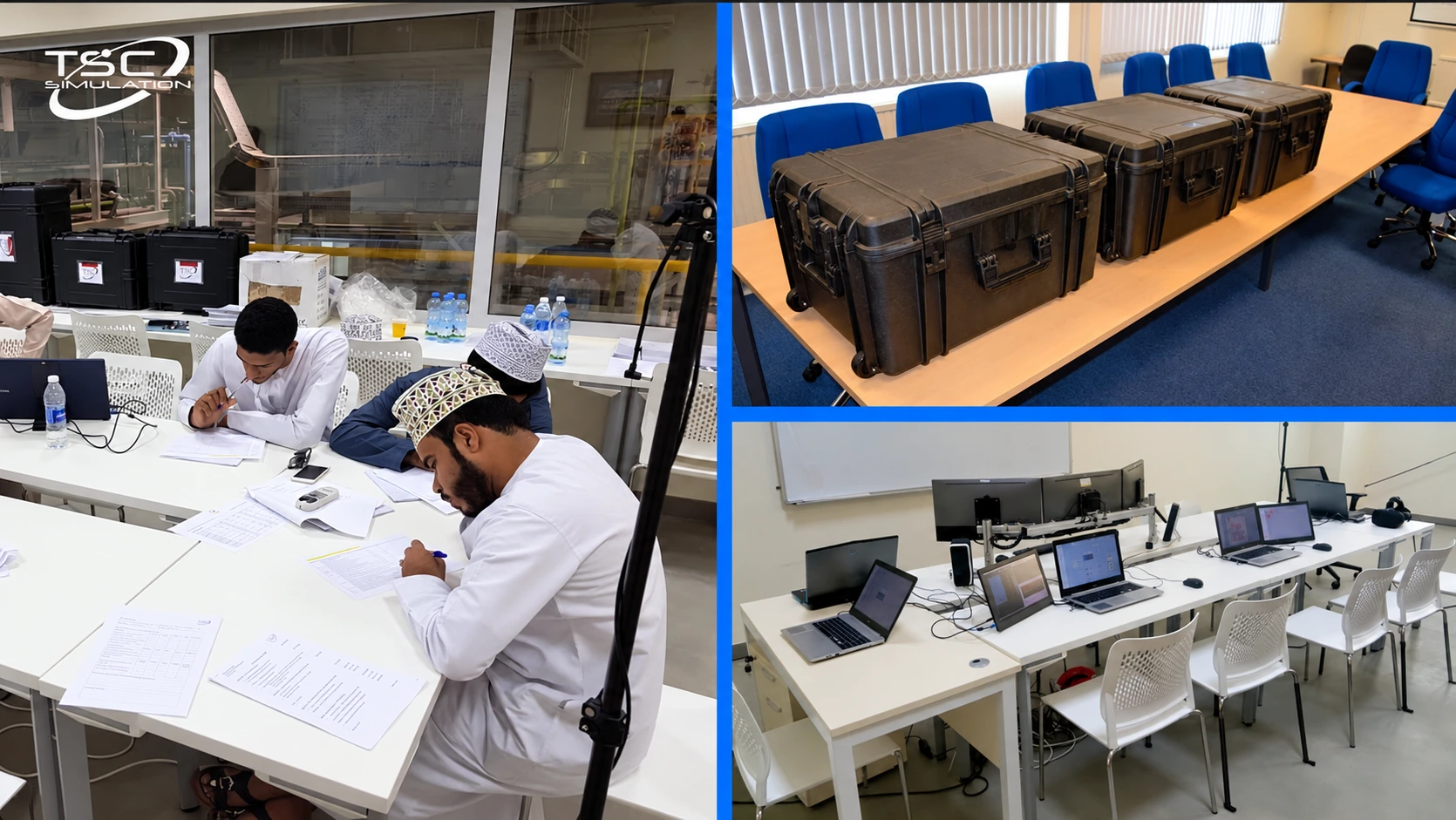
Training, transport cases and the equipment set up for classroom use.
TSC Simulation; video screenshot supplied by Luke Johnson, with player overlays removed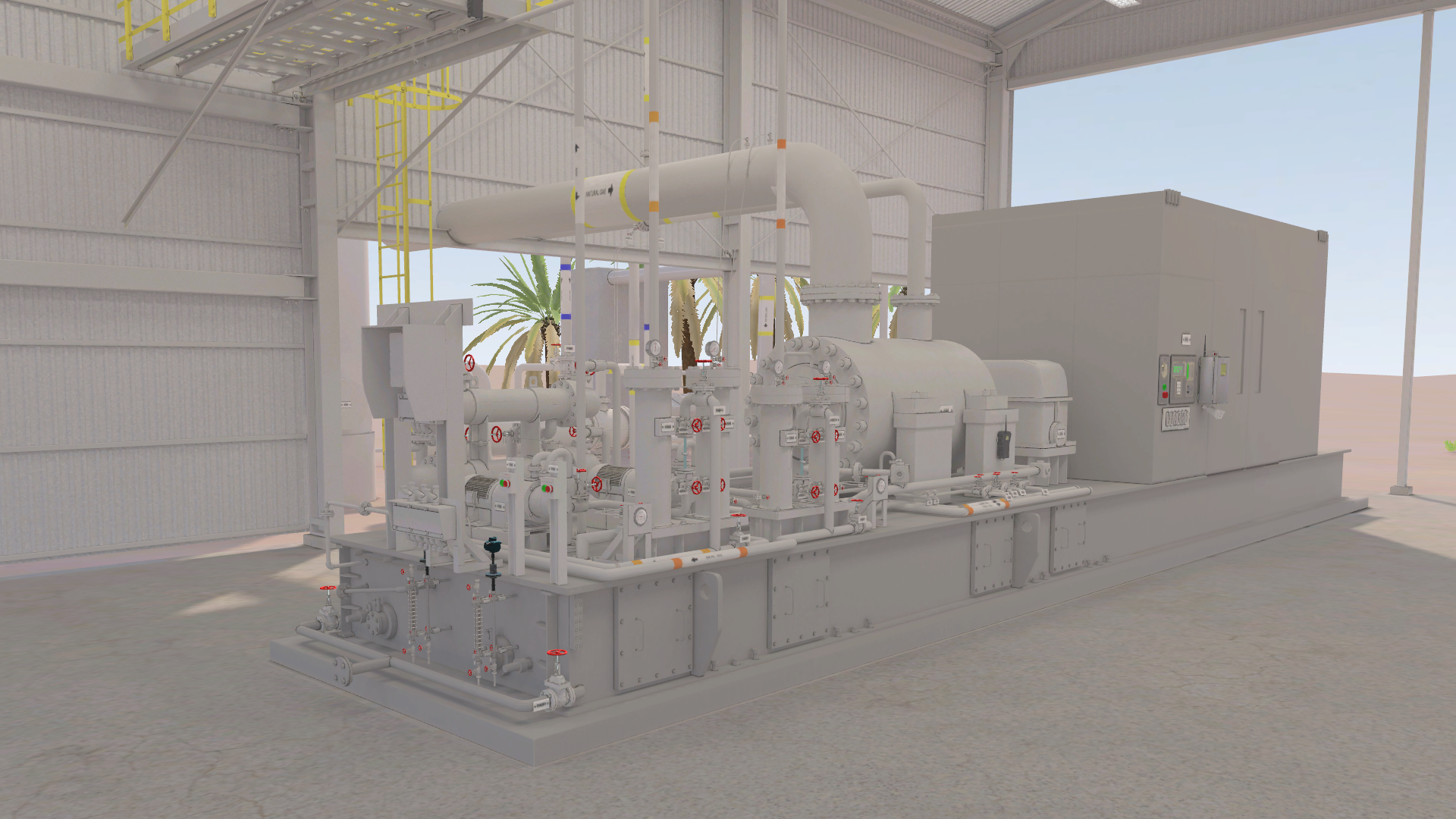
The EON centrifugal compressor environment shown running on the portable system’s surround display.
TSC Simulation / EON Reality; screenshot supplied by Luke Johnson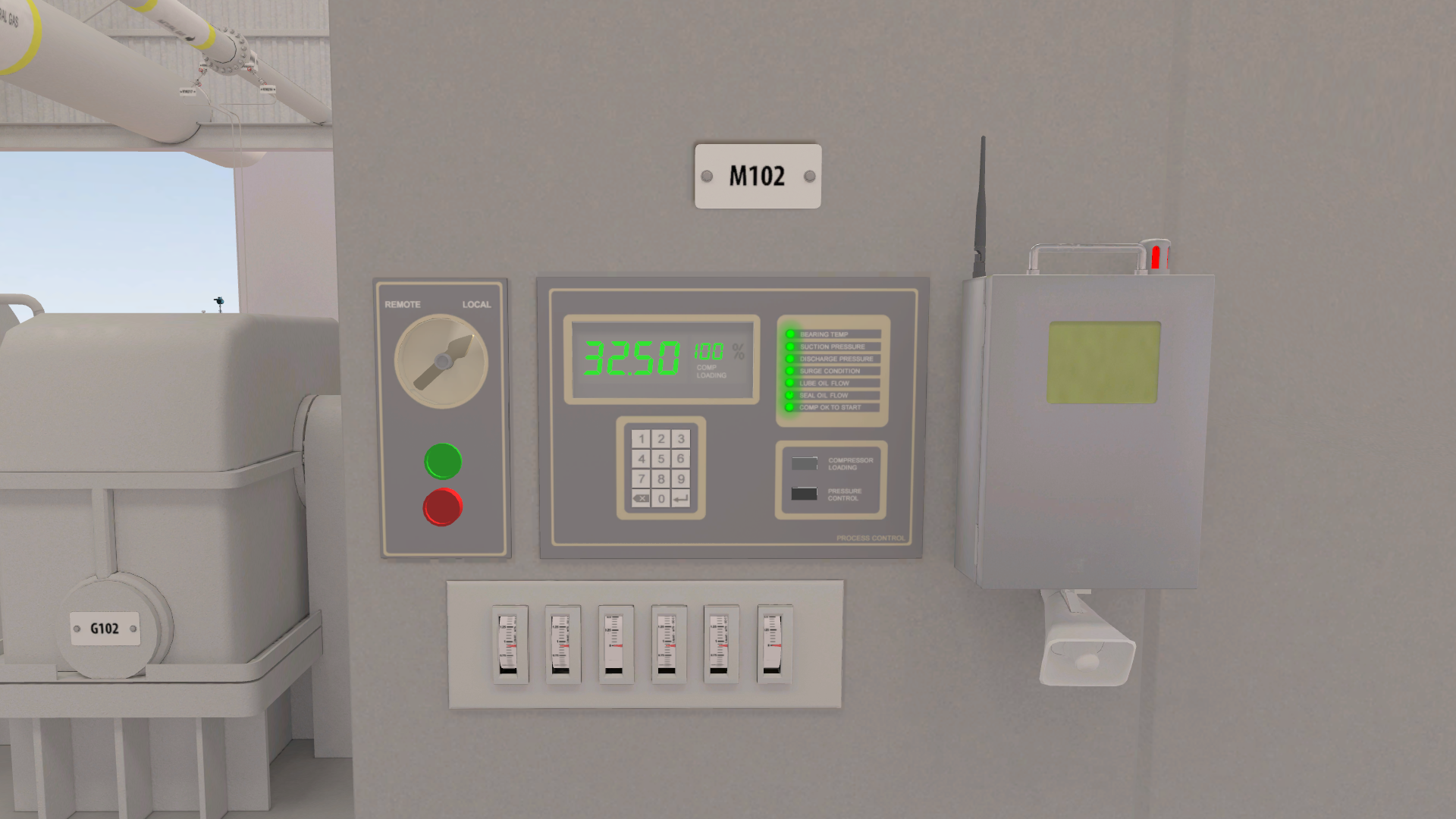
Local field controls within the virtual plant, complementing the separate control-room operator stations.
TSC Simulation / EON Reality; screenshot supplied by Luke Johnson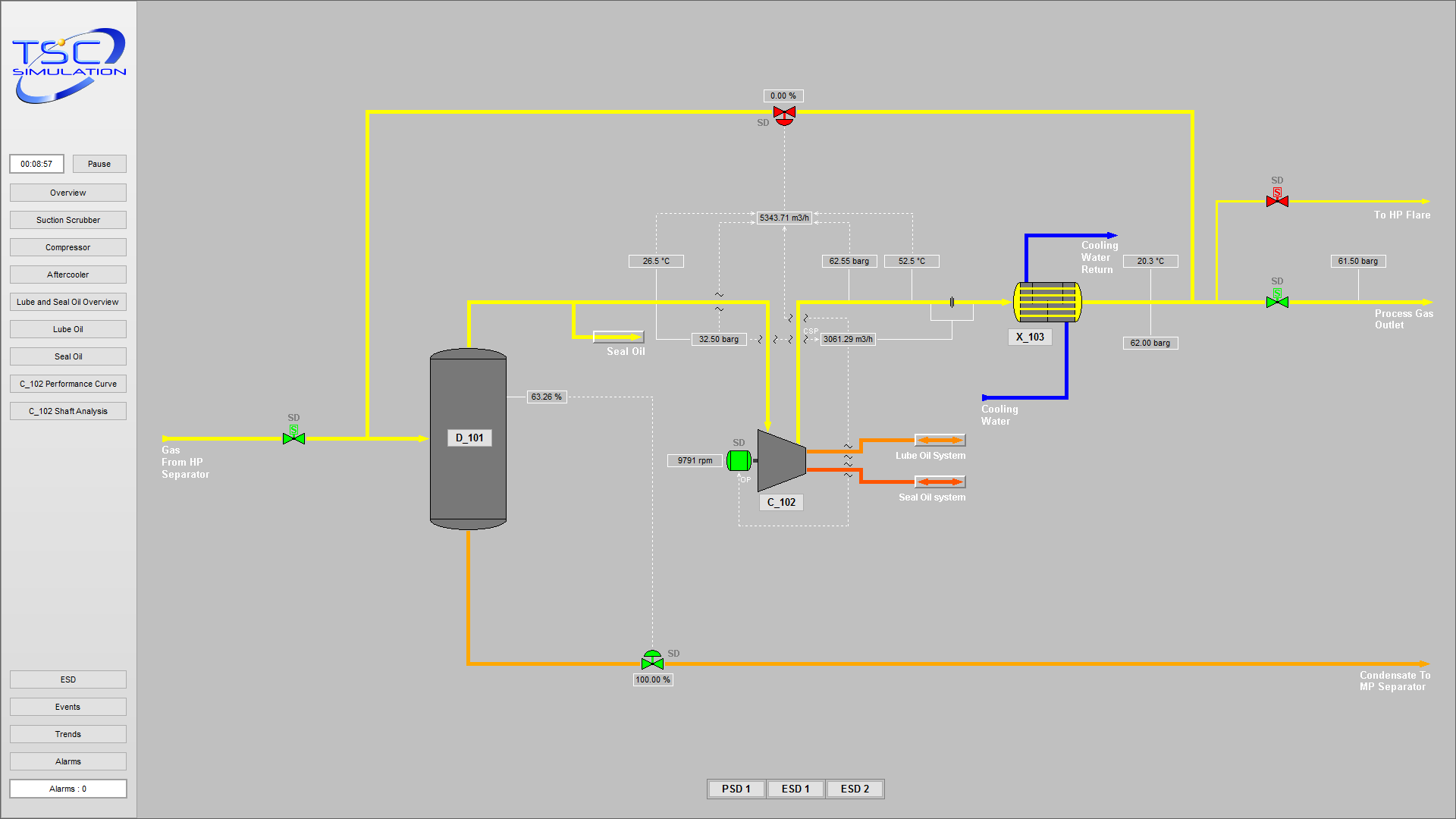
The compressor simulation interface supplied alongside the 3D field environment.
TSC Simulation; screenshot supplied by Luke JohnsonFurther context
Technical references and related project information.