Hardware product / TSC Simulation
SMC IPC201C Process Control.
Integrated and supported SMC’s process-control training hardware with TSC SCADA, from legacy PLC recovery and long-term maintenance to international installation and cloud data analytics.
Loads YouTube only when you press play. Watch on YouTube ↗
TSC’s hardware training demonstration, featuring the IPC201 process-control unit and the separate TPS200 three-phase separator.
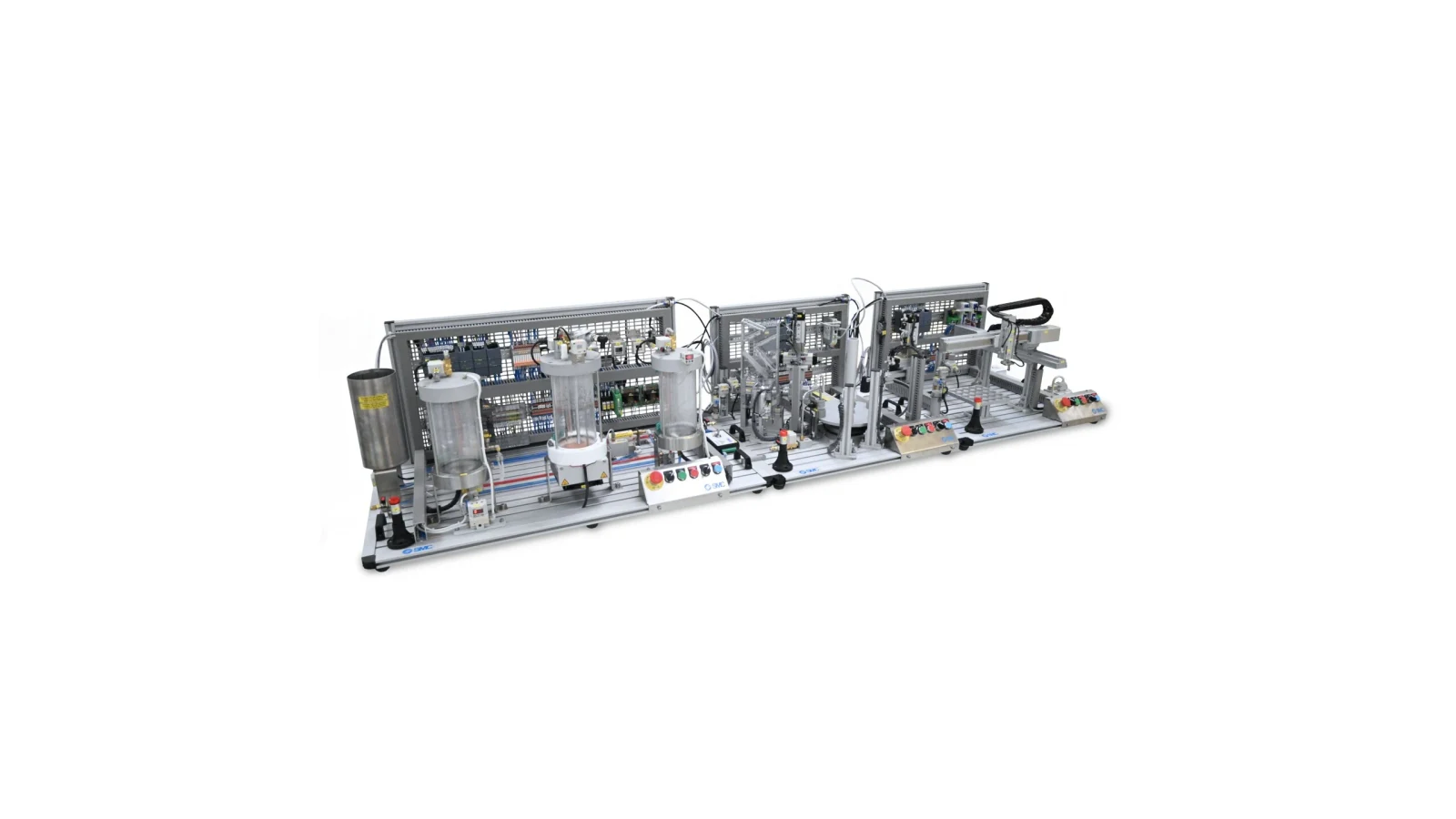
Complete SMC IPC-200 training line with process-control, bottling and palletising stations. · Product image: SMC International Training ↗
Industrial process training, connected to TSC SCADA
We bought IPC training systems from SMC International Training, integrated them with TSC’s SCADA, and supplied them to customers around the world. My role covered maintaining and managing installed equipment, configuring different PLC platforms, commissioning systems and helping customers keep their training hardware operational.
The IPC201C is the process-control production station within SMC’s modular IPC-200 range. It can operate on its own or connect to optional bottling and palletising skids to form a complete three-station line. That flexibility meant supporting both individual process units and integrated production lines, with different hardware and communications requirements at each installation.
From process control to a complete production line
The production station uses three tanks: two outer vessels hold liquid, with a central vessel for mixing and process control. IPC201C provides analogue control of temperature, level, pressure and flow, supporting practical work with instrumentation, PID control and process disturbances.
Flow can be driven by a variable-speed pump or by a pressure difference between tanks. The side vessels are pressurised, while the central vessel operates at atmospheric pressure. A differential-pressure measurement provides the central vessel’s level signal, and Peltier elements provide heating and cooling.
| Station | Training role |
|---|---|
| IPC201C — production and process control | Liquid handling and mixing, with regulation of temperature, level, pressure and flow. |
| IPC202 — optional bottling | Bottle filling and capping around a six-position indexing table, with automated bottle feeding. |
| IPC203 — optional storage and palletising | Cartesian handling into a 25-position storage area, combining electric horizontal axes with pneumatic vertical movement. |
The system connects continuous-process control with the sequencing and handling needed downstream. The SCADA captures below show the process overview, filling sequence and storage operations within TSC’s interface.
Forth Valley College — maintenance since 2012
Forth Valley College has three IPC units with Omron CJ1M PLCs. I have maintained them continually since 2012, supporting the installed equipment over many years of teaching use.
This long-term responsibility sits alongside the initial installation work: understanding the hardware, diagnosing faults and maintaining the connection between the physical process, PLC and SCADA so the equipment remains useful to learners.
Redcar and Cleveland College — restoring a complete line
At Redcar and Cleveland College, I overhauled and reinstated an older, non-working IPC system. It was a full three-station line, including bottling and palletising, controlled by Siemens S7 CPU 313C-2 DP hardware.
The recovery required work across several layers. I replaced I/O cards, edited the PLC code and found a suitable OPC connection for the SCADA. I also had to get Siemens STEP 7 V5.5 running, working through the difficulties around its Windows 7 compatibility.
I selected IBH OPC Server for the project and brought the hardware, PLC logic and supervisory interface back into operation together. The restored line has been working at the college since 2014.
Oslo and Akershus — installation and data analytics
I delivered a complete IPC line to Oslo and Akershus University in Norway, using Siemens S7-1500 PLCs. I also connected the system to Siemens MindSphere for data analytics.
I travelled to SMC’s factory in Vitoria, Spain, to commission and test the complete IPC lines before they were shipped to Norway. The factory photographs show the equipment during this stage of the delivery. The automated bottling plant included bottle dispensing, filling, cap dispensing, cap pressing and offloading stations. The adjoining palletising station received the filled bottles, which a pick-and-place robot transferred onto a pallet.
This extended the training system beyond local operation: the physical process and its PLC data became a basis for exploring connected industrial systems and analytics, alongside process control, bottling and storage.
South Tyneside College — two complete lines with custom HMIs
From July to September 2015, I delivered two complete IPC lines to South Tyneside College in South Shields, UK. I programmed custom Omron HMIs in CX-Designer, connected to the CJ1M PLCs, to improve learner engagement and allow operation without the full SCADA. TSC SCADA was also supplied for each unit through Omron CX-Server OPC v2.1.
I was responsible for costing, configuration, logistics, delivery, installation, training and long-term support. The South Tyneside College project page includes the installation photographs and delivery details.
Further installations and customer support
In July 2015, I installed a process unit only at Savannah Technical College in Georgia, USA. This was the standalone production configuration, without the bottling and palletising stations.
The University of Central Lancashire also has both an IPC and a TPS. Together, these installations reflect the range of customer configurations I supported, from individual process-control trainers to complete connected lines.
Across the IPC work, I combined hands-on fault-finding, PLC programming, OPC integration, SCADA configuration and international customer delivery. The responsibility was to make the complete training system work in its teaching environment and to support it through years of use.
Continuing ownership
My product ownership and support continued from my initial involvement through my departure in October 2026. Engagement dates vary; the customer accounts above preserve the known history.
Equipment & operating context
A closer look.
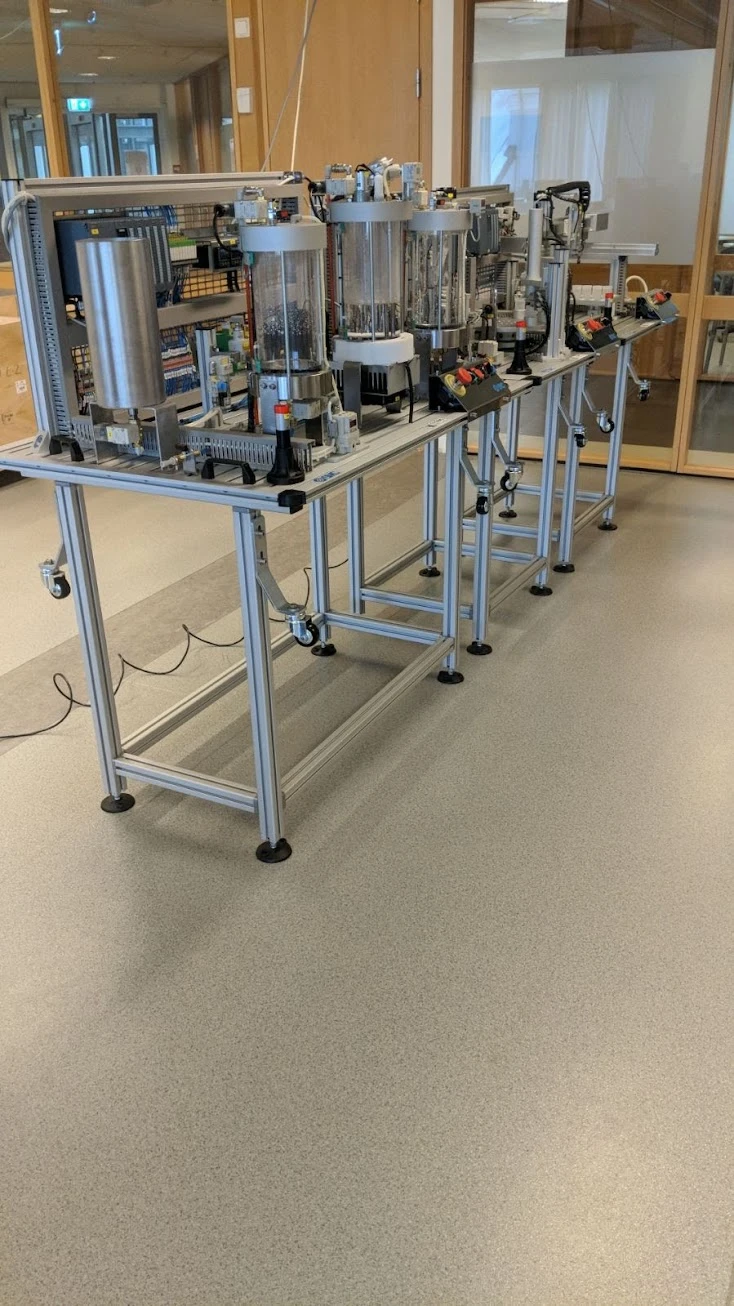
The complete IPC line in place at Oslo and Akershus University in Norway, following commissioning and testing at SMC’s factory in Spain.
Photo supplied by Luke Johnson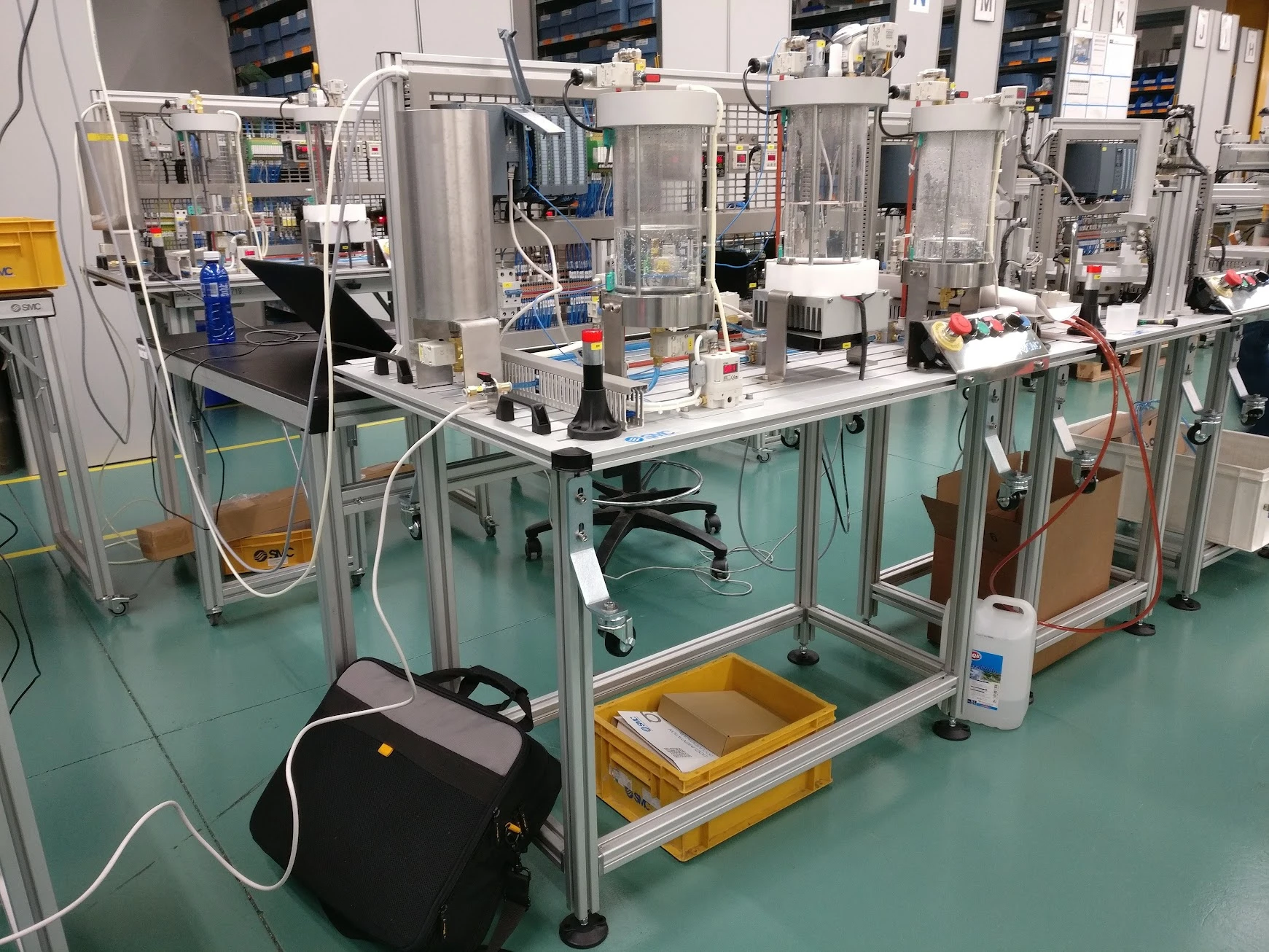
Complete IPC lines with Siemens S7-1500 PLCs for Oslo and Akershus University. I travelled to SMC’s factory in Vitoria, Spain, to commission and test the lines before they were shipped to Norway.
Photo supplied by Luke Johnson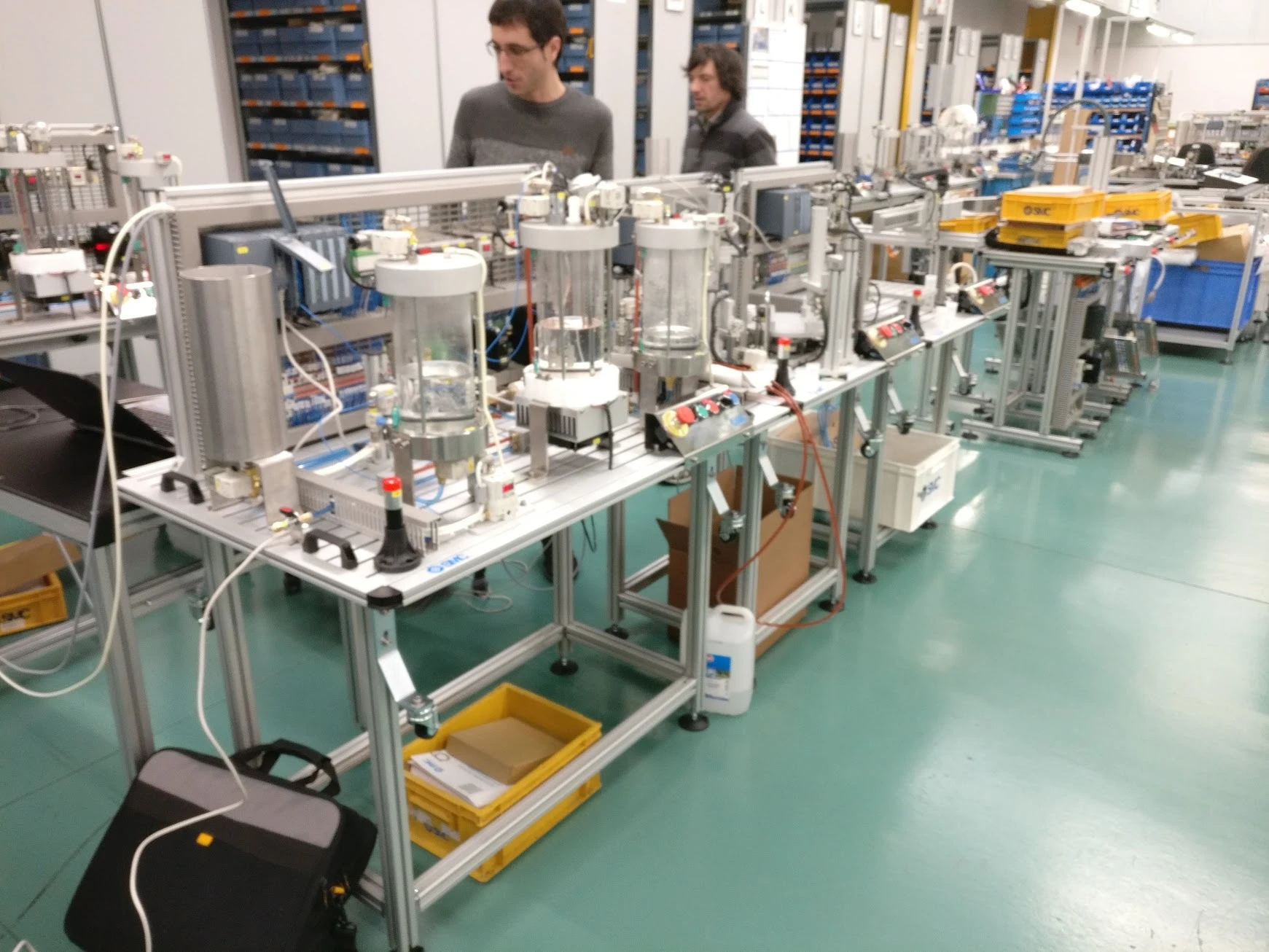
The IPC line with Siemens S7-1500 PLCs destined for Oslo and Akershus University, photographed at SMC’s factory in Vitoria, Spain.
Photo supplied by Luke Johnson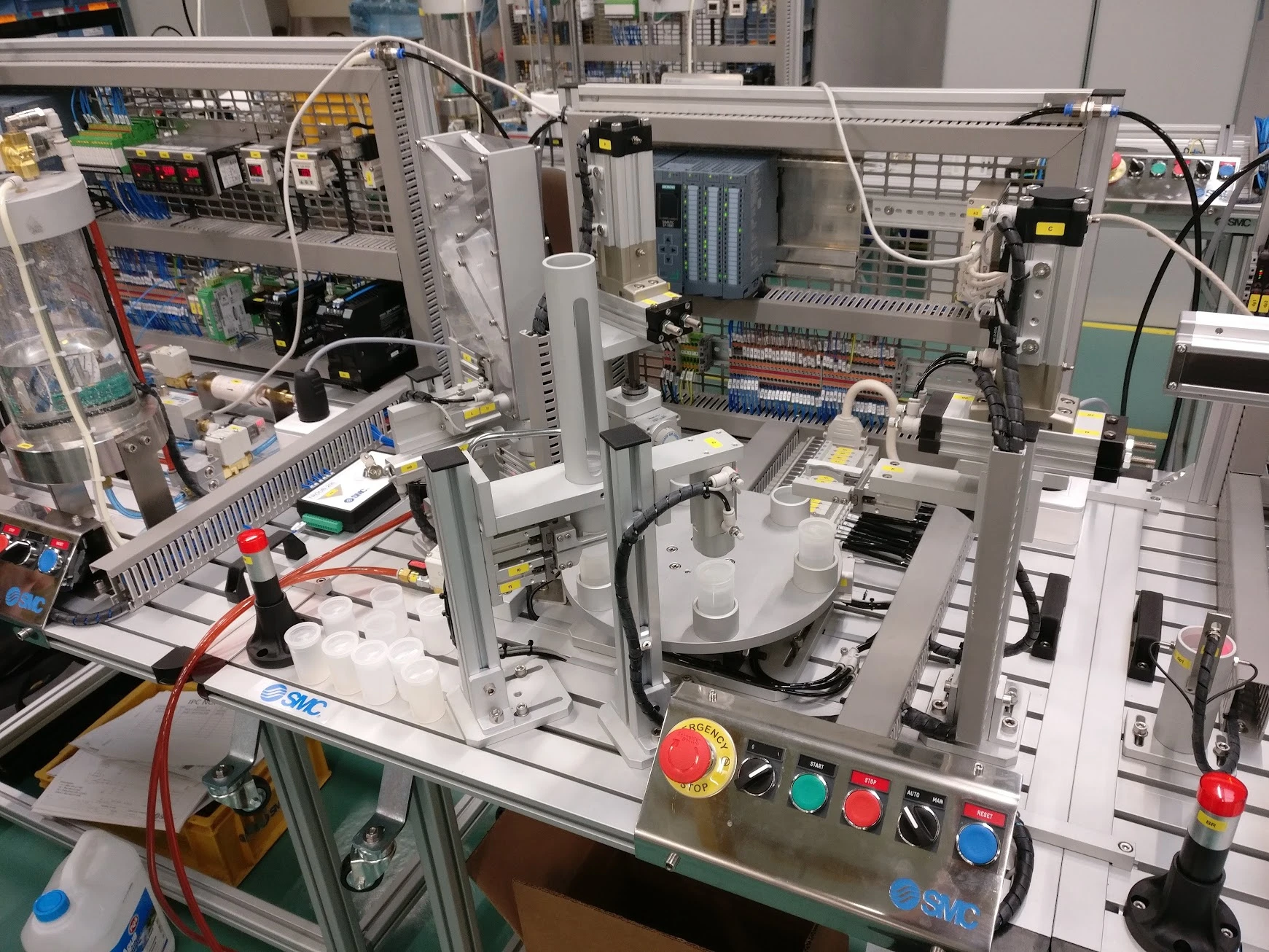
Automated bottling plant supplied as part of the Oslo and Akershus IPC installation, with bottle dispensing, filling, cap dispensing, cap pressing and offloading stations.
Photo supplied by Luke Johnson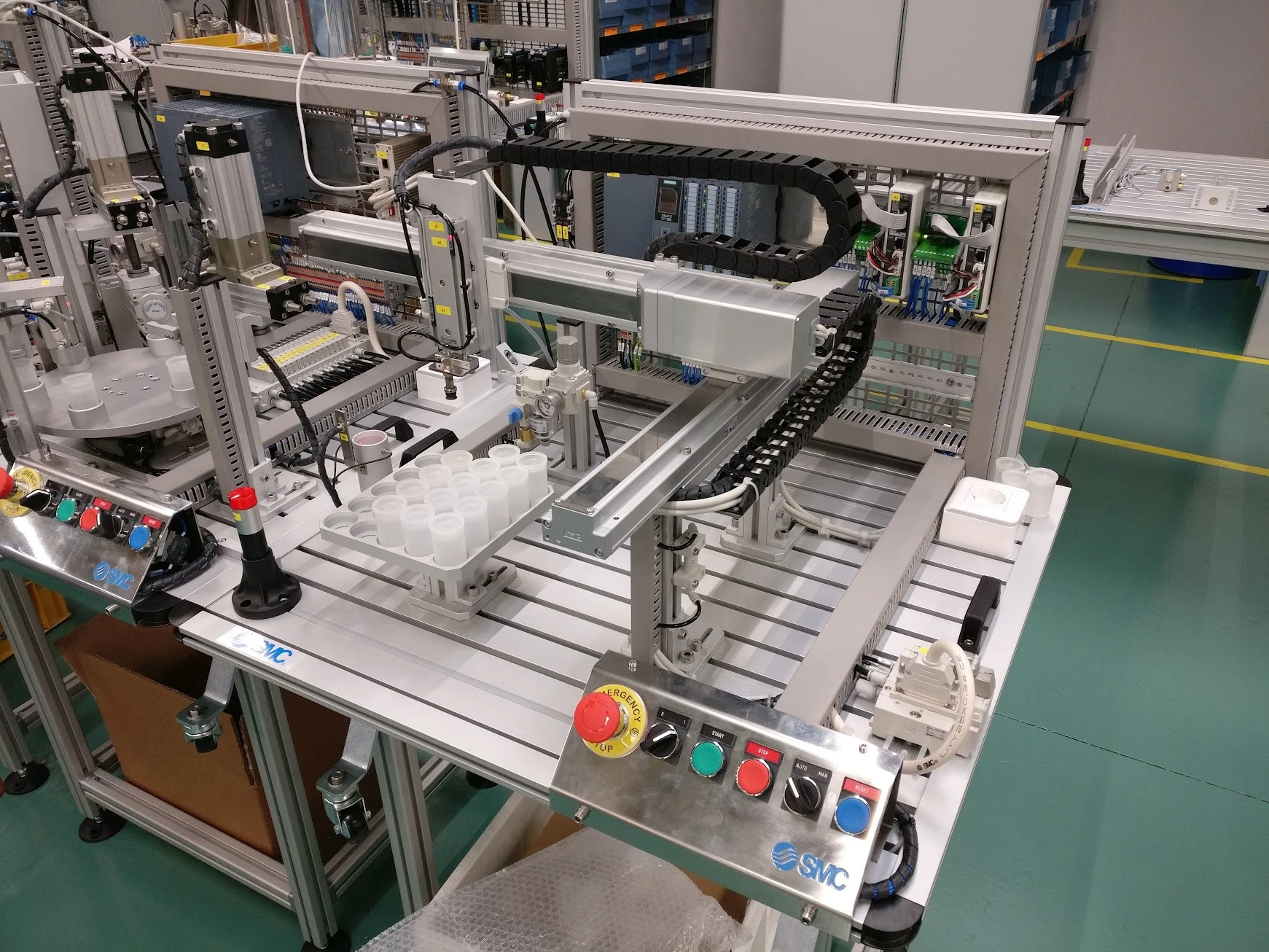
The IPC palletising station for the Oslo installation. Once a filled bottle reaches the receiving station, the pick-and-place robot lifts it and places it onto the pallet.
Photo supplied by Luke Johnson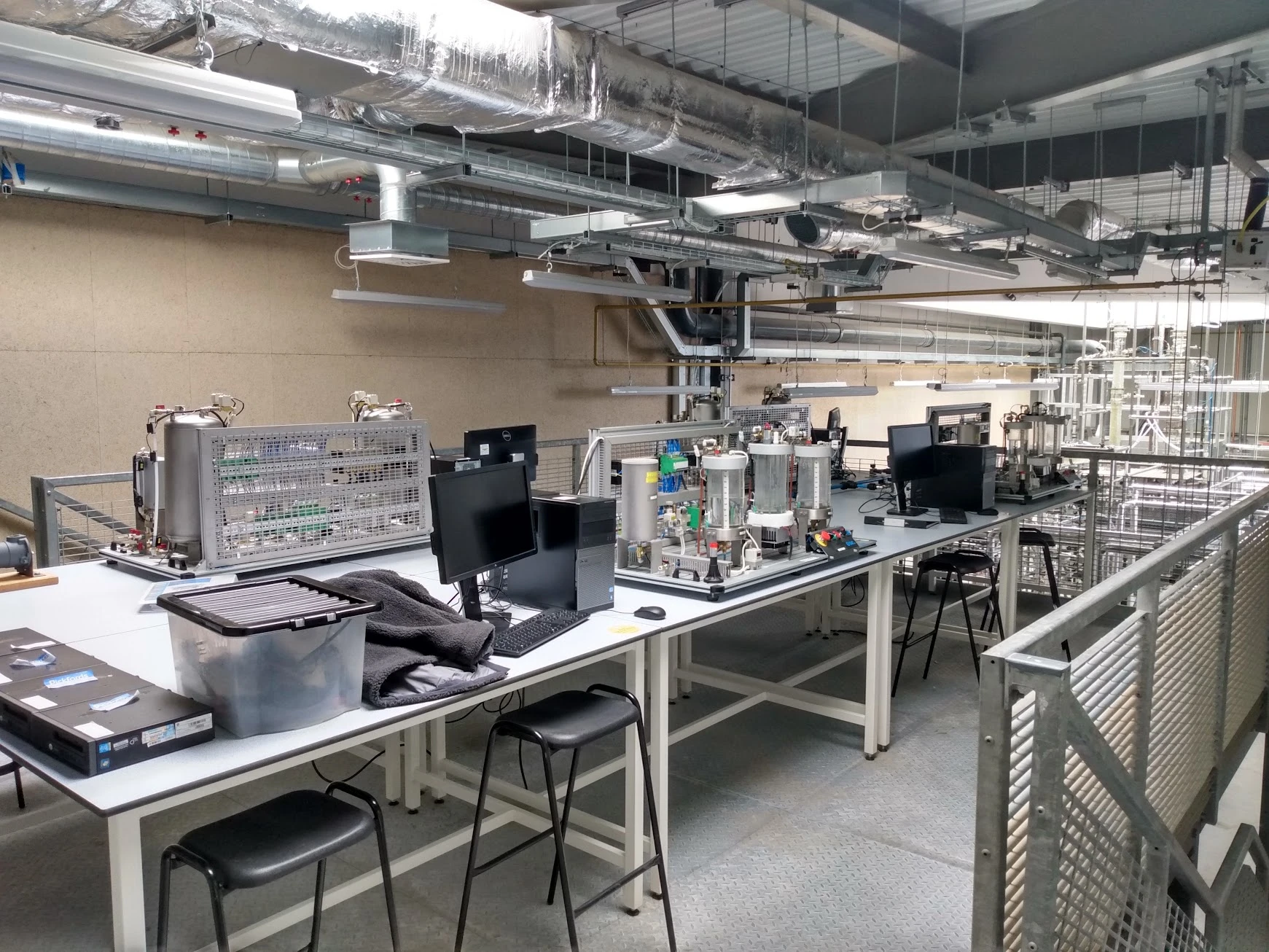
IPC equipment in the teaching laboratory at Forth Valley College, where I have maintained three Omron CJ1M units since 2012.
Photo supplied by Luke Johnson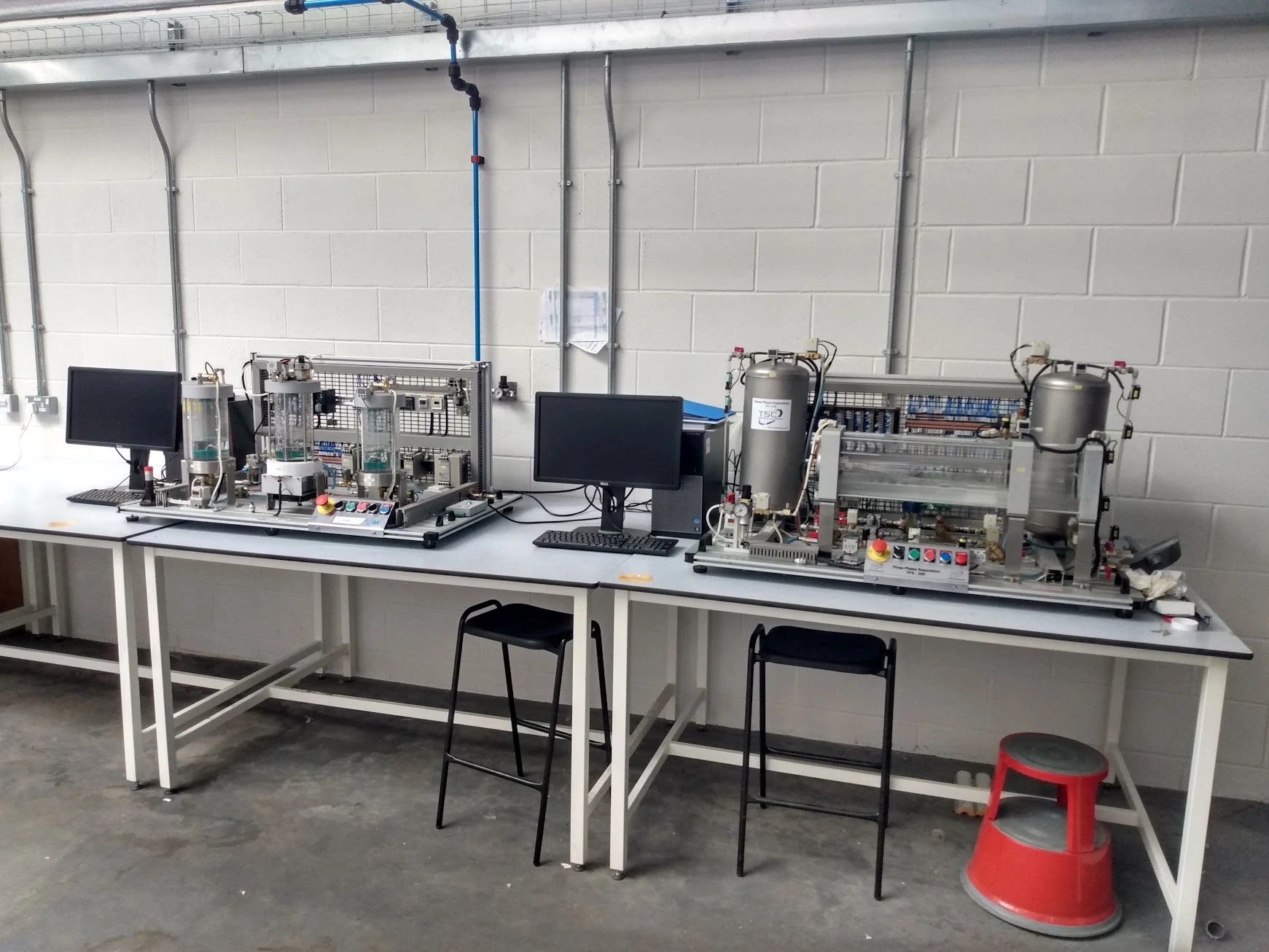
IPC and TPS200 installed side by side at Forth Valley College, each with its connected PC interface.
Photo supplied by Luke Johnson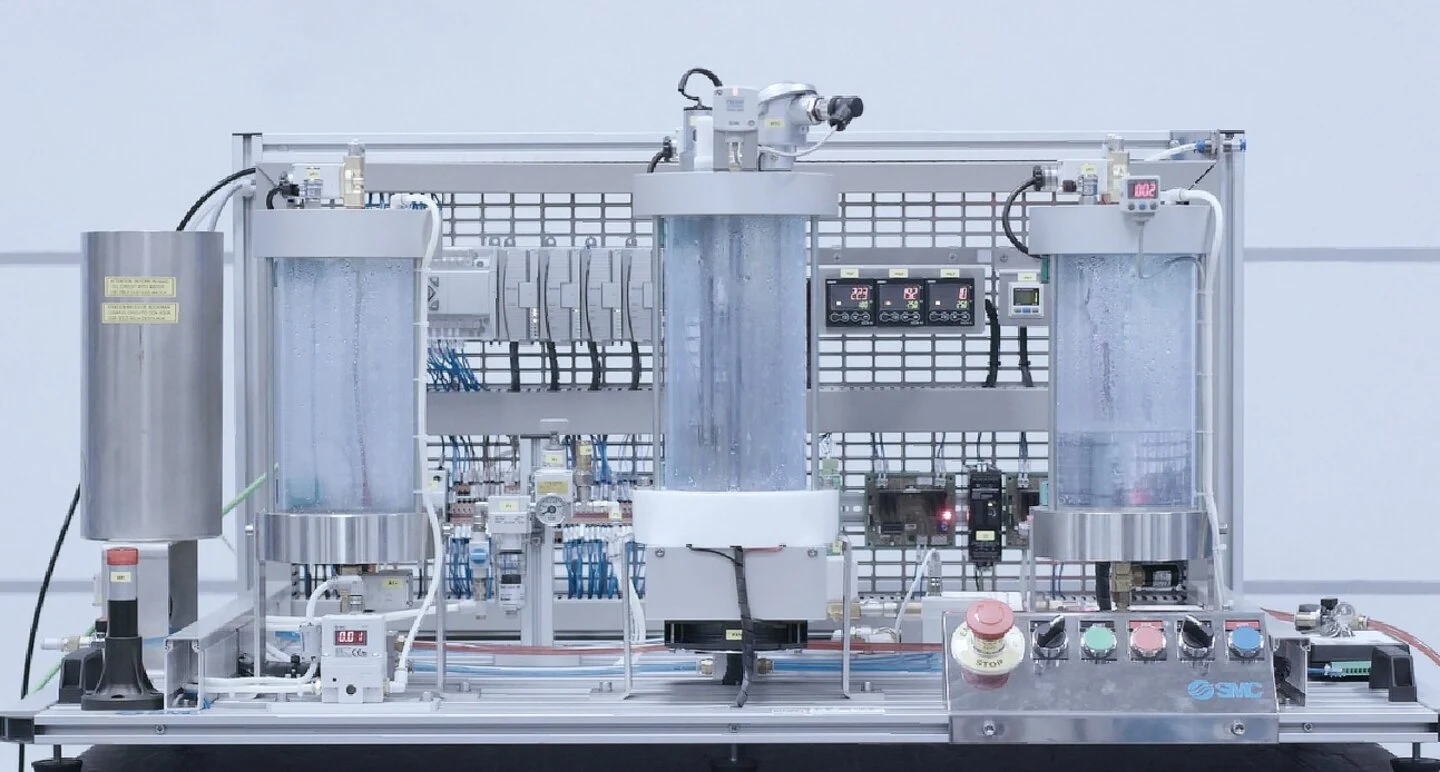
The IPC201C production station brings process equipment and instrumentation together on a compact training frame.
SMC International Training ↗The complete IPC-200 line combines production, bottling and automated storage. Stations can also be used individually.
SMC International Training ↗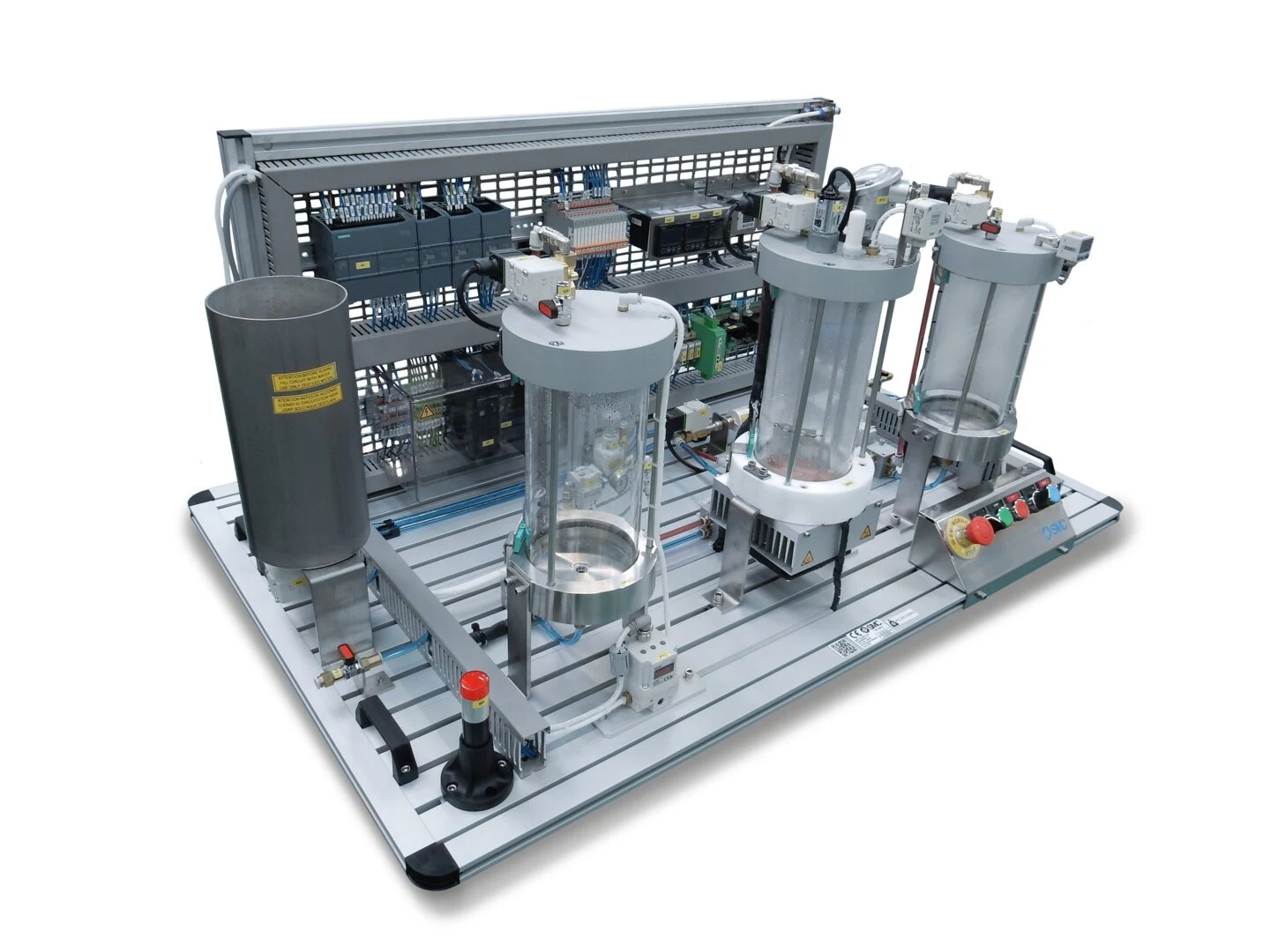
IPC201C adds analogue regulation of temperature, level, pressure and flow to the production station.
SMC International Training ↗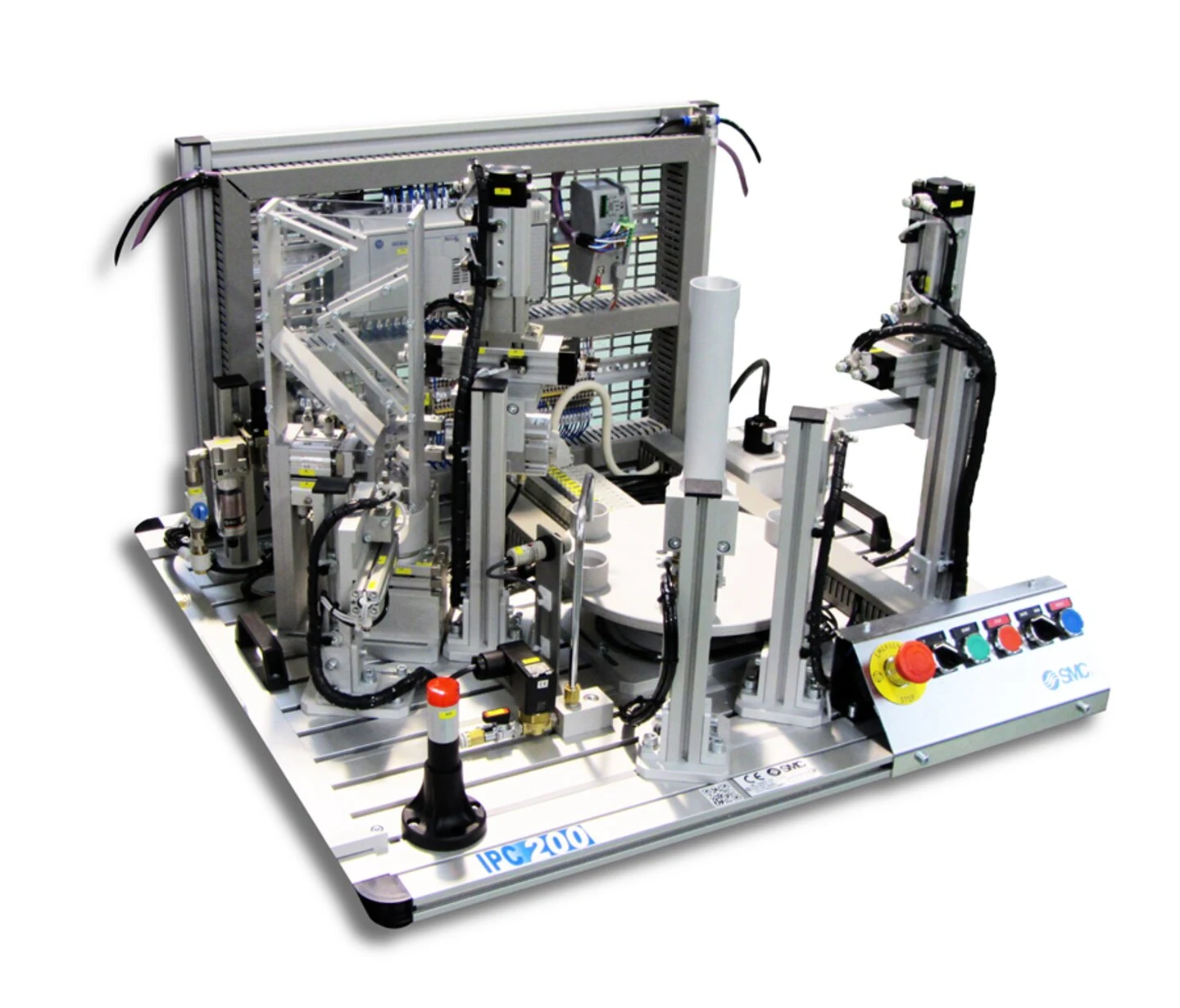
The IPC202B alternative adds automatic bottle feeding with position detection and correction.
SMC International Training ↗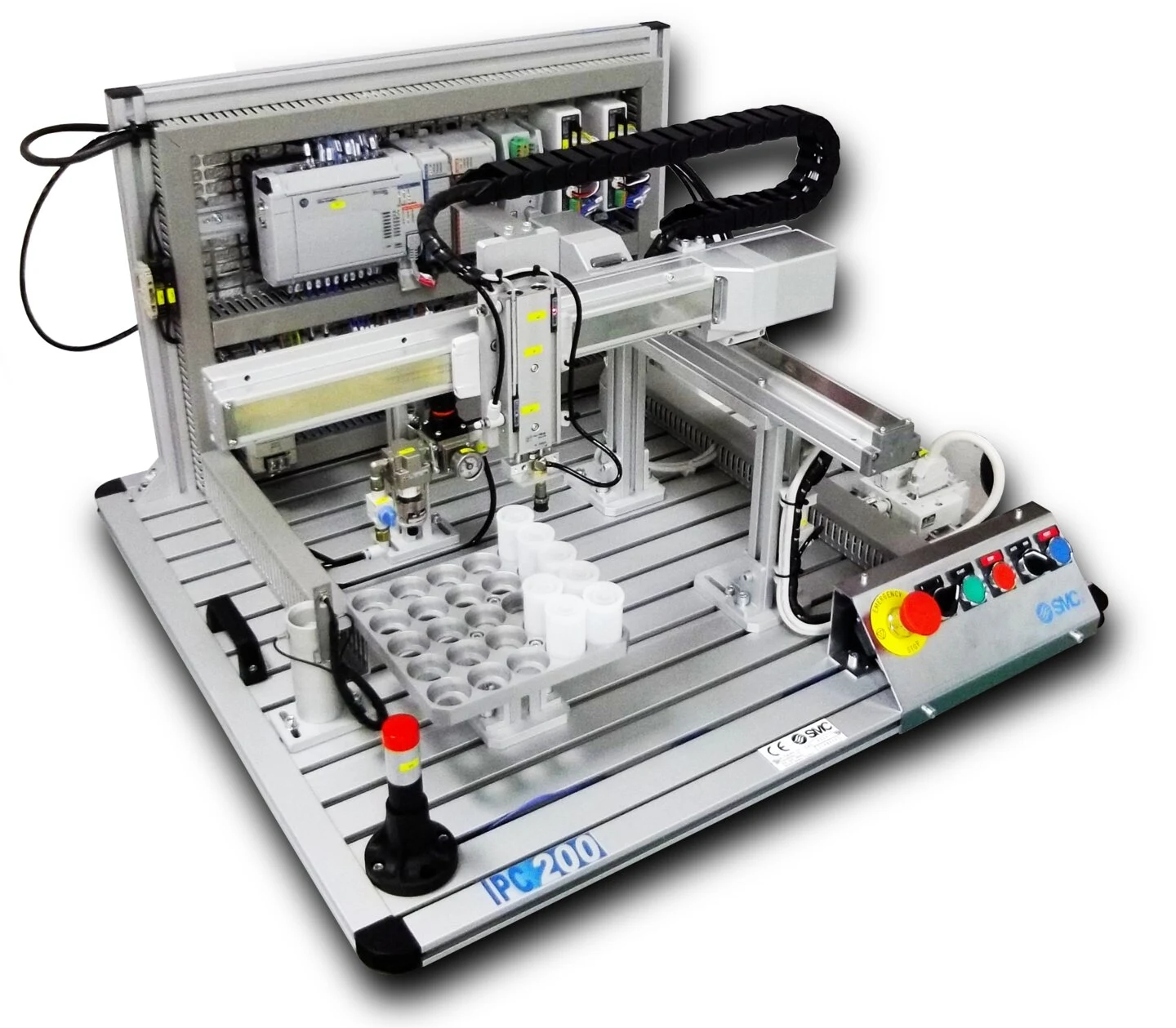
The optional IPC203 station transfers bottles into a 25-position automated storage area.
SMC International Training ↗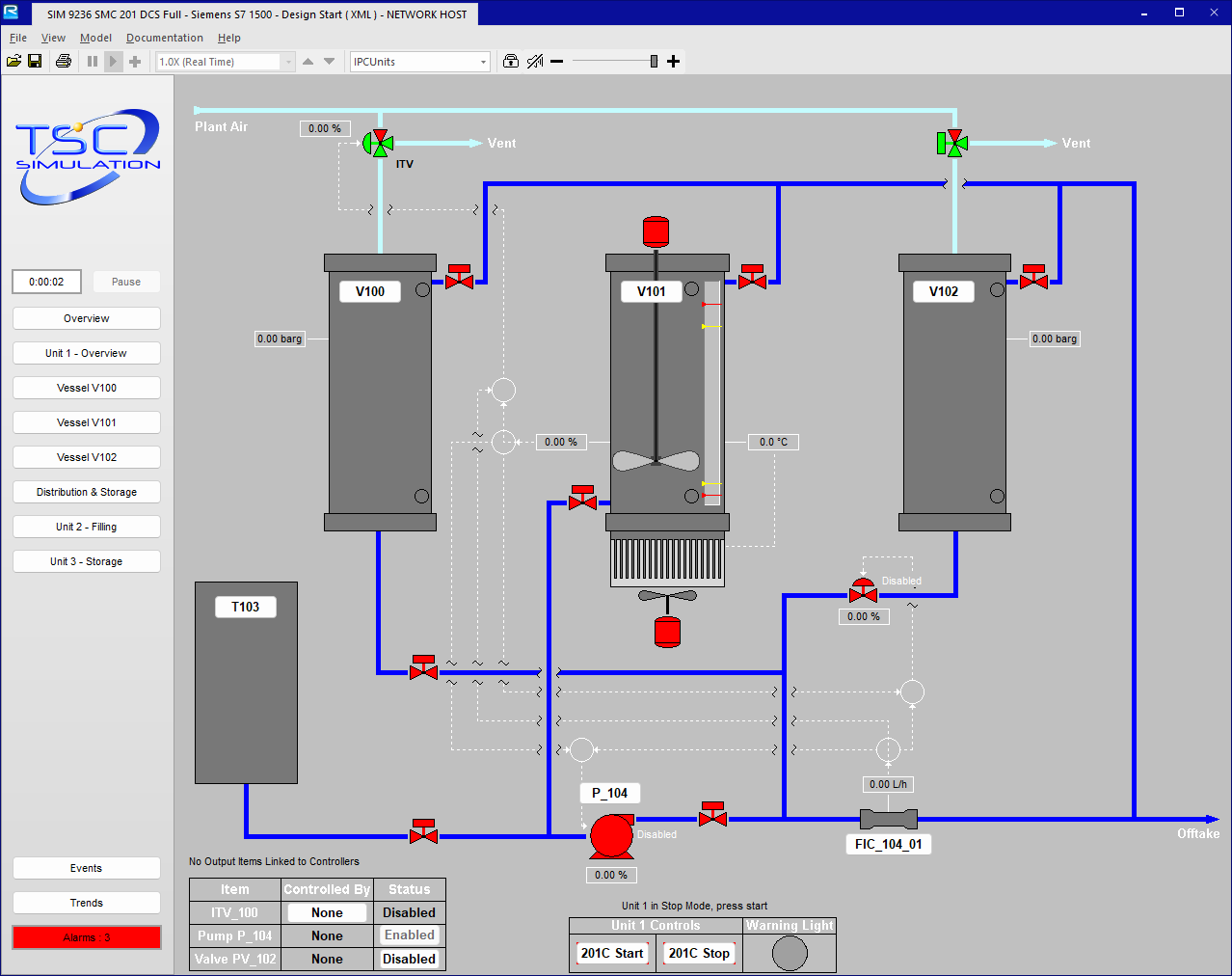
The TSC SCADA process overview for a Siemens S7-1500 configuration, with the interface in a stopped state.
TSC Simulation / screenshot supplied by Luke Johnson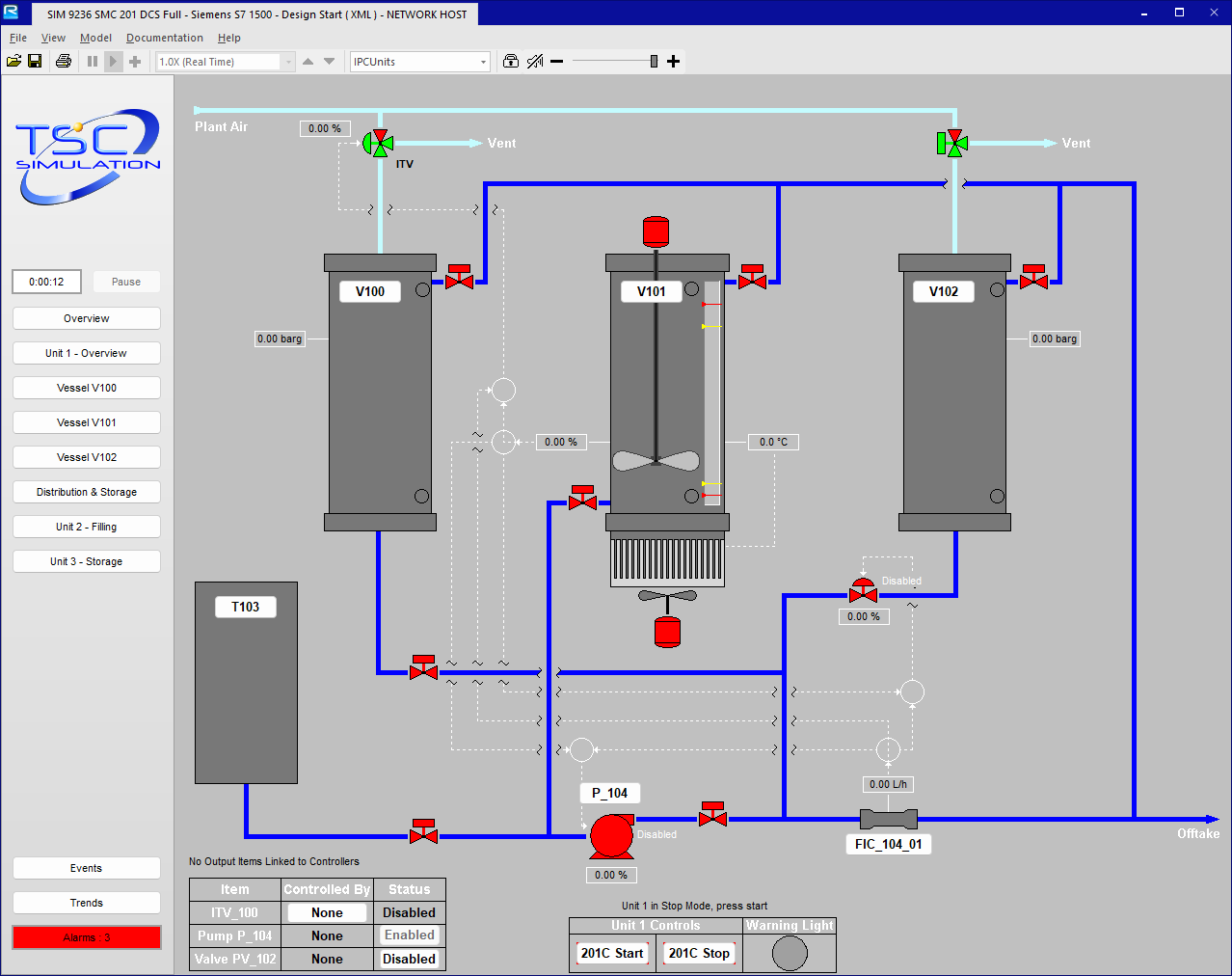
A second process display showing equipment states and the controls used to operate the production unit.
TSC Simulation / screenshot supplied by Luke Johnson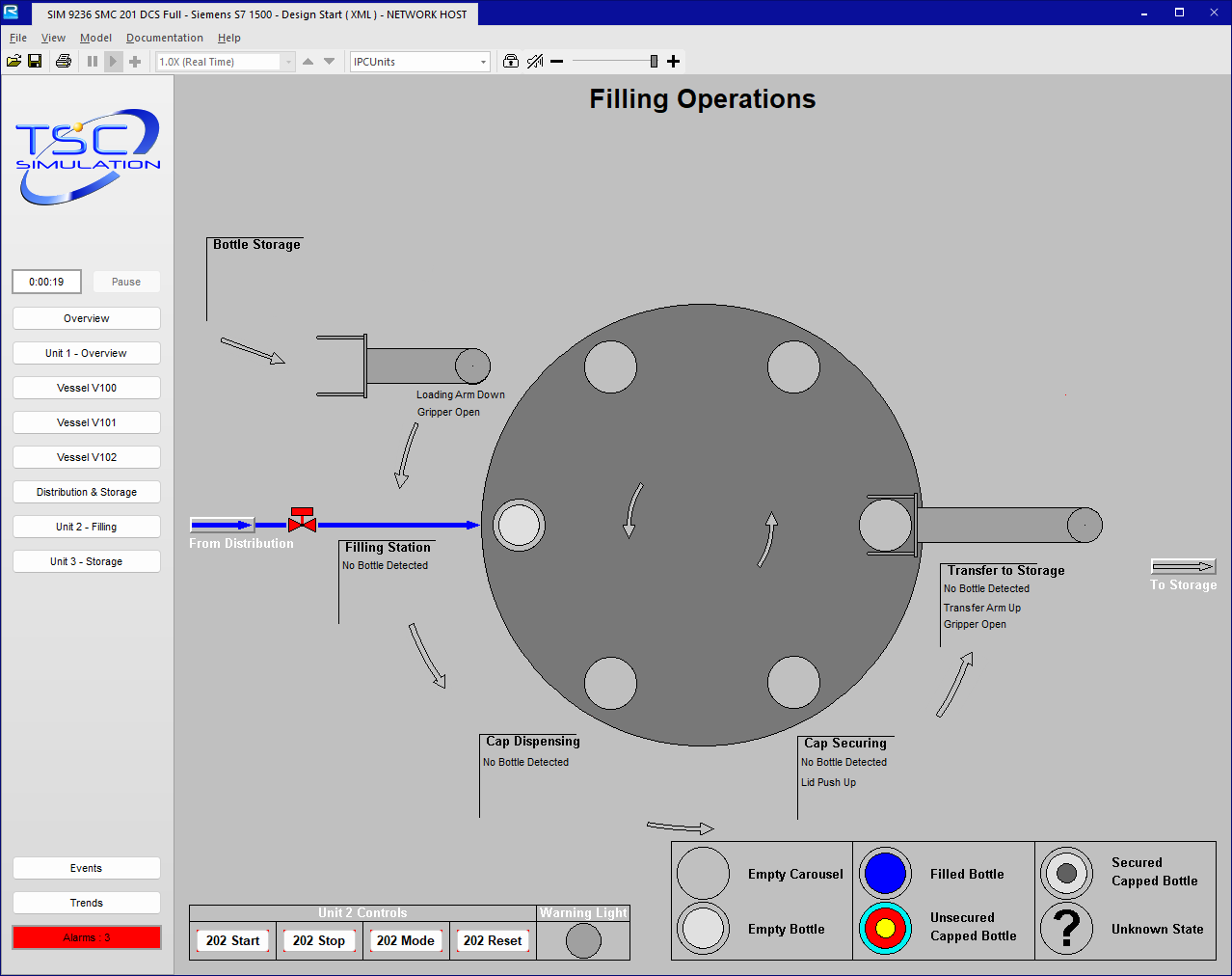
The bottling interface follows the bottle through loading, filling, cap dispensing, cap securing and transfer to storage.
TSC Simulation / screenshot supplied by Luke Johnson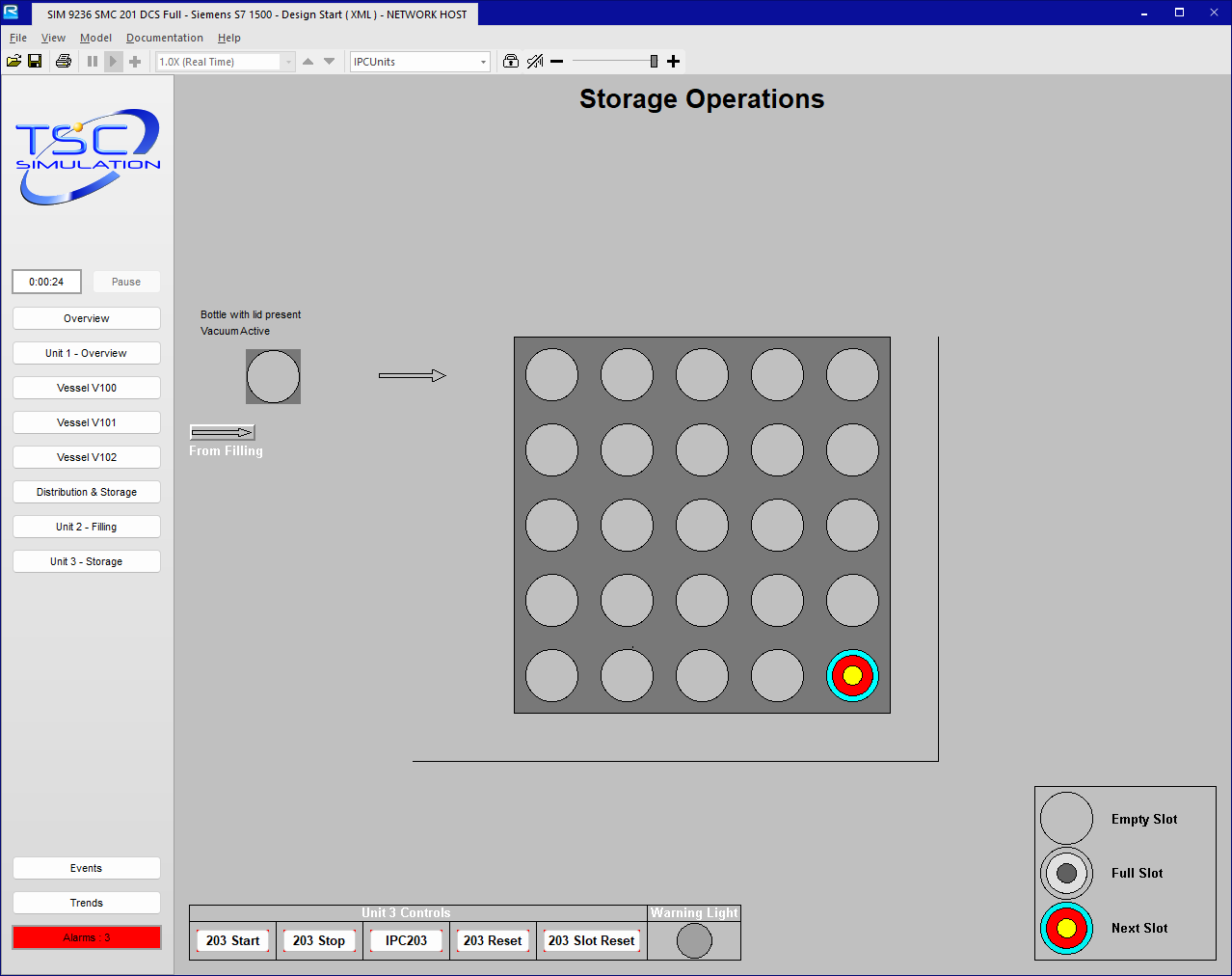
The storage interface presents the 25 bottle positions, occupied states and next storage position.
TSC Simulation / screenshot supplied by Luke JohnsonFurther context
Technical references and related project information.