Internal development / TSC Simulation
TSC7 Generic Simulation Redevelopment.
Rebuilt generic training simulators from the ground up using standardised, reusable process-equipment models, retaining their learning objectives—the start of my product creation and management journey.
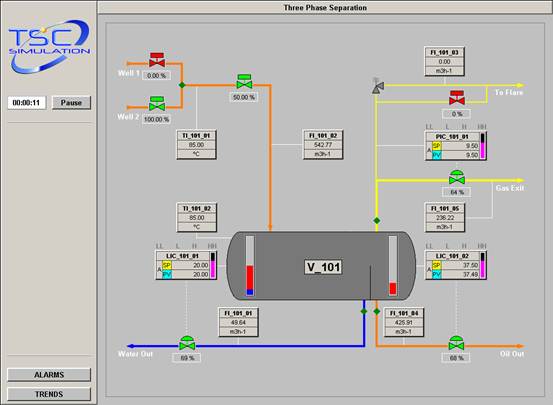
TSC Simulation; screenshot preserved in my placement reports
The start of my product creation journey
TSC7 rebuilt TSC’s generic operator-training simulators from the ground up. These were brand-new models of control principles and process equipment, retaining the established simulation scope and learning objectives while using the latest process-simulation standards available at the time.
As a placement student and the project’s main facilitator, I did substantial hands-on development alongside experienced simulation engineers. This was the start of my product creation and management journey: learning how engineering, user interfaces, reusable standards, testing and delivery fit together.
Reusable process modelling and a repeatable build process
Standardised, reusable approaches to modelling valves, pumps, vessels and pipes gave the new range a consistent engineering foundation. Equipment behaviour and configuration followed shared conventions, making the models easier to build, test and maintain.
Alongside the process models, the work established drawing templates, equipment layouts, valve graphics, controller faceplates and configuration guidelines. Trial models and reviews with the engineering team helped refine these standards.
Using SimEdit and Paint Shop Pro, I rebuilt simulations, configured process equipment and control logic, developed the graphics and worked through the operating behaviour. The result was a new implementation of each training exercise, with reusable modelling practices connecting the range.
Model development
| Workstream | Contribution and progress |
|---|---|
| Separation, wells and pumping | Worked on three-phase separation, multiple wells feeding a manifold and separator, pump operation and control arrangements. |
| TEG dehydration and regeneration | Rebuilt the model with an existing, more complex simulation as a process reference; technical review remained part of the handover work. |
| Distillation | Prepared graphics and the initial model structure. Completion depended on selection of the column mathematics. |
| Refrigeration | Configured a closed-loop refrigeration model and worked through its mass balance and operating behaviour. |
| Heat exchangers and control | Built temperature-control models and helped a new graduate learn the workflow while developing a related cascade-control model. |
Testing and early customer use
Testing covered configuration, interface behaviour and consistency with the previous training exercises, with mathematical scope reviews carried out by experienced engineers. Our workflow separated initial checks, engineering review and final retesting.
During April–May 2009, we sent four rebuilt models for customer feedback: PID level control, flash-vessel flow/pressure/level control, direct and cascade control, and basic pump operations. A heat-exchanger model was also sold later in the placement.
Handover and continuation
At handover in September 2009, the project covered 23 models. Several were ready for sale or had shipped; others still needed review, further development or resolution of technical issues. We had developed the range as a team, with my hands-on work focused on the areas described above.
I handed over the project in September 2009 and continued my placement until approximately October, when I returned to university. The standards and reusable build approach provided a foundation for subsequent simulator development.
Equipment & operating context
A closer look.
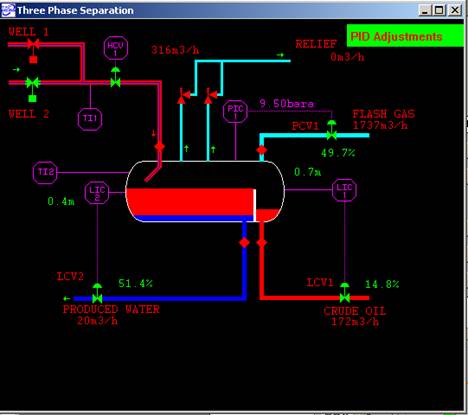
The earlier separator model, preserved in the September–October 2008 report, provides the starting point for the redevelopment.
TSC Simulation; screenshot preserved in my placement reports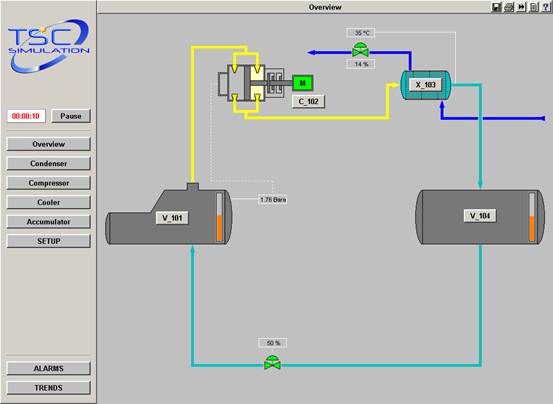
The refrigeration model developed during March–April 2009, connecting process behaviour, control and a closed-loop mass balance.
TSC Simulation; screenshot preserved in my placement reports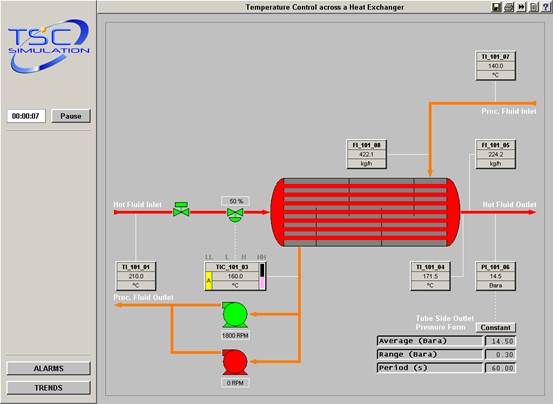
SIM_283, built while helping a new graduate develop the related cascade-control model in July–August 2009.
TSC Simulation; screenshot preserved in my placement reports