Client project / AMEC
Hole House Phase 3 — Dynamic Simulation Study.
Carried out dynamic simulation studies and authored the report for AMEC Darlington, assessing start-up, shutdown, process safety times and compressor-surge behaviour.
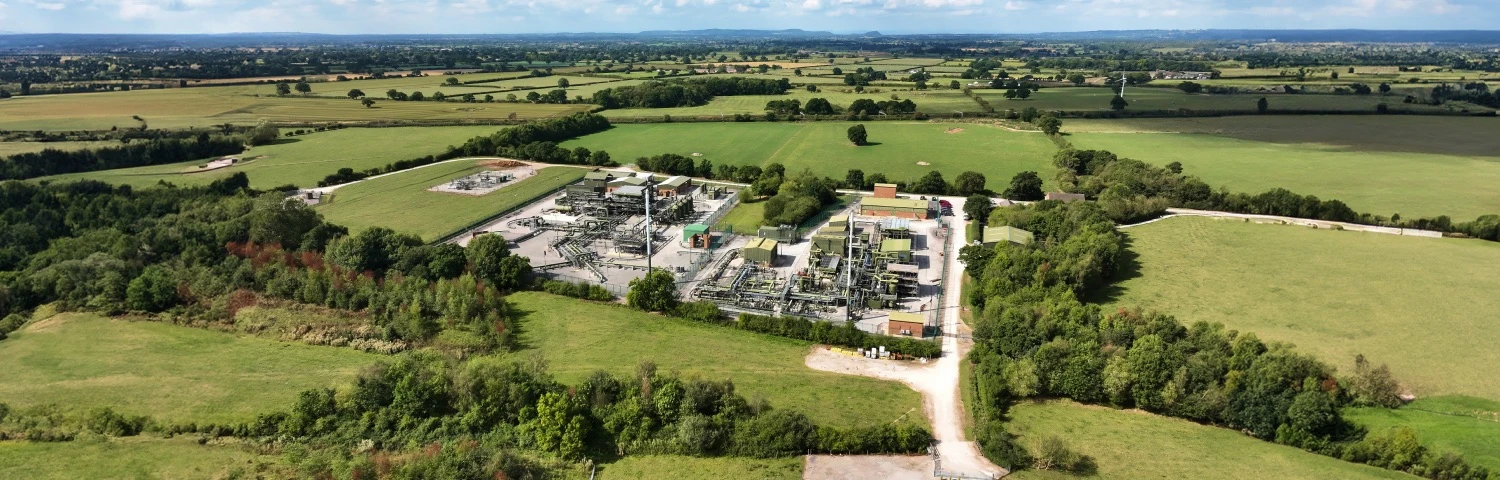
Kistos · site reference photograph ↗
Dynamic modelling and engineering studies
Commissioned by AMEC Darlington, this work supported a gas-storage development at Hole House Phase 3, in the Hill Top Farm area near Crewe, Cheshire. The study ran approximately from November 2010 to June 2011.
Carried out the simulation work and wrote the complete engineering report, connecting dynamic process behaviour with the engineering questions being assessed.
Building and validating the model
The model followed the process configuration shown on the P&IDs, using TSC’s established library of process-equipment algorithms. The engineering work lay in assembling, configuring and validating the site model using AMEC’s design information.
Pipe isometrics and arrangement drawings were used to establish pipework geometry and internal volumes, with instrumentation represented at the appropriate positions. Valve sizing and characteristics were incorporated so the flow paths and their response reflected the system being studied.
Compressor curves from AMEC were digitised and incorporated into the compressor and anti-surge control objects. Gas properties and environmental heat transfer were considered as part of configuring the process response. Steady-state validation compared the model against the design operating cases and mass-balance data before the dynamic studies were carried out.
Start-up, shutdown and upset studies
The study examined transitions into and out of different operating conditions, including start-up, controlled shutdown and emergency shutdown. The specified shutdown methodology was represented in the model so the combined effects of compressor response, valve actions and changing gas conditions could be examined over time.
Compressor-surge assessment investigated how the operating point moved during shutdown and how the anti-surge system responded. The work supported engineering advice around potential design and control approaches.
Other cases examined valve failures, blocked flow paths and the response to process upsets. These runs connected the modelled equipment behaviour to questions about operability and protection.
Process safety time studies
Process safety time is the interval between an initiating process failure and a hazardous event, assuming no effective protective action. It establishes the time available for the protective response.
The simulation runs followed the development of process conditions after selected failures or disturbances, recording the time to agreed assessment limits. This provided evidence for reviewing the process response and the timing requirements of protective actions.
My contribution
The assignment brought together model configuration, validation, execution and interpretation of study cases, and authorship of the full engineering report. It developed my experience of turning drawings, equipment data and operating cases into a dynamic model that could support design decisions.
The AMEC study-method overview explains the input data and wider modelling approach.
Customer projects
Related customer projects
Further context
Technical references and related project information.