Client project / Liberty Steel / Materials Processing Institute
Liberty Steel Stocksbridge.
Led the plant-scanning team and digital-twin delivery, and built a mathematical rolling-mill proof of concept within the InTiFi industrial digitalisation programme.
Plant location / Satellite view
Open in Google Maps ↗Stocksbridge steelworks
Stocksbridge, South Yorkshire. Explore the steelworks and its surroundings in satellite view.
Loads YouTube only when you press play. Watch on YouTube ↗
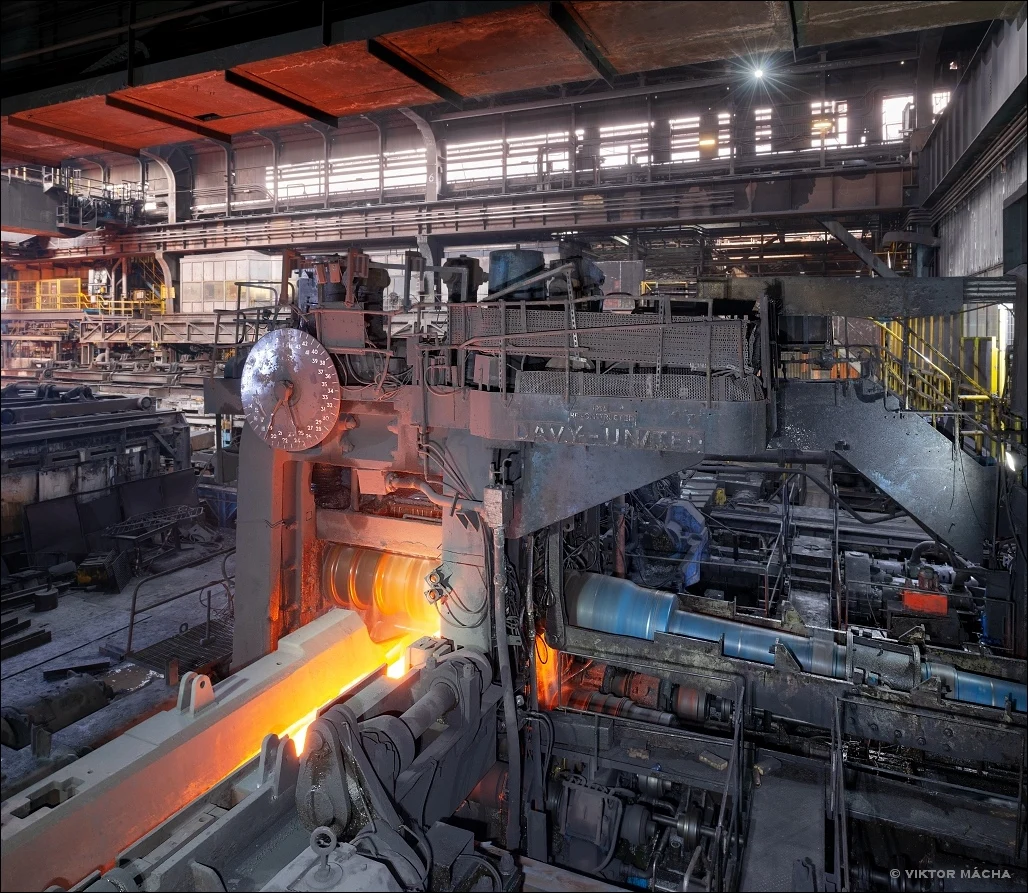
The Stocksbridge 40-inch rolling mill processing a glowing steel workpiece. · Photography: Viktor Mácha ↗

Bringing digital-twin methods into steel manufacturing
InTiFi — Industry 4 Technologies into Foundation Industries — was an Innovate UK-funded programme within the UKRI industrial digitalisation landscape. Working with the Materials Processing Institute and Liberty Steel, its aim was to investigate how digital technologies could reduce costs and improve the performance of existing industrial plant.
TSC was one of the industrial technology partners, contributing process simulation and digital-twin capability. For me, the Stocksbridge work meant taking our experience in process industries and oil and gas into a new domain: steel rolling, material deformation and the realities of a large, established steelworks.
One week on site. A foundation for the digital twin.
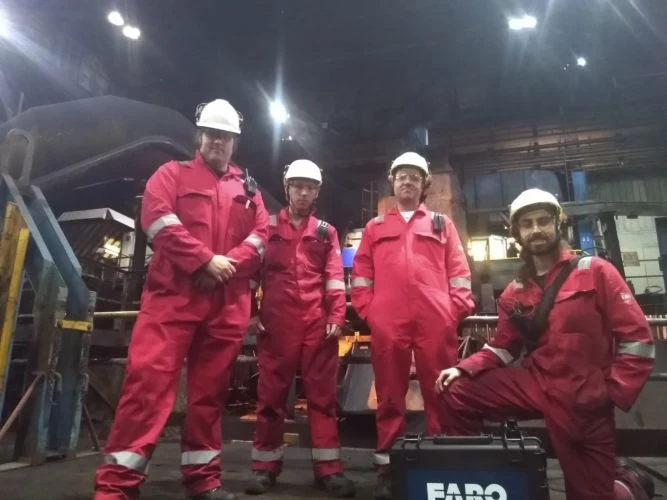
We laser-scanned the facility and process in one week. I was the onsite lead, managing the team’s activities and safe working practices in a live heavy-industry environment.
Our 3D team then converted the captured point-cloud data into meshes and built a navigable, real-time environment in Unity. The purpose went beyond creating a visual record: the model provided a spatial foundation on which plant data, engineering models and simulation experiences could be brought together.
There were two complementary directions to investigate: operator competency and training, and better access to connected plant information.
Practising the first rolling process
The 40-inch millstand is a critical asset. A mistake during the first rolling stage can damage the workpiece, interrupt production or overload equipment that is expensive and time-consuming to repair.
We focused on the operating decisions behind those risks. Too many passes can allow excessive temperature loss; poor handling can strike the workpiece against the rolls and deform it; a mishandled rolling sequence can produce a “cobble” or require material to be recycled. The training objective was to let operators practise rolling schedules before carrying them out on the real equipment.
We built an interactive version of the millstand that could be operated in a similar way to the physical machine. My hands-on technical contribution was a proof-of-concept mathematical simulation of the stand, which drove the 3D visualisation. The TSC project film below shows the resulting environment and operating demonstration.
This was a proof of concept for exploring the training approach. It established a connection between the engineering behaviour and the visual interaction, with the ambition of supporting more consistent operating practice.
Connecting fragmented plant information
The second direction was data aggregation. The site had many systems and data sources, but limited connectivity between them. Monitoring and interpretation relied heavily on people bringing information together.
We investigated a tool that would aggregate live plant data and help explain what was happening, when it happened and why. The 3D plant model offered a way to place that information in its physical context. This strand remained at the investigation stage when the project ended.
Related work at MPI’s Normanton plant
A related project applied the same scanning and navigable-model approach at the Materials Processing Institute’s Normanton steel plant in Middlesbrough. The Institute’s 2021 conference paper records TSC’s digital scan and 3D navigable model, alongside MPI’s wider Industry 4.0 work.
The paper is by AG Taylor, Principal Researcher at the Materials Processing Institute. It provides independent context for TSC’s contribution and the wider programme.
Download the Normanton Industry 4.0 paper — PDF, 8 pages
Leading across sites, disciplines and stakeholders
I managed the customer and partner relationships, worked with end users across sites, researched operational problems, defined requirements and work packages, and helped shape where a digital twin could provide practical value. I also led the development team and our onsite activities, while contributing directly to the millstand simulation.
The work demanded a new understanding of metals rolling and deformation, alongside the ability to turn unfamiliar operational problems into a clear technical direction. It pushed both me and the team beyond our established process-industry experience.
Our project ended earlier than planned amid the financing disruption following Greensill Capital’s collapse. The scanning workflow, real-time environment and mathematical proof of concept nevertheless made this an important step in TSC’s digital-twin development and in my own experience of engineering leadership.
Programme relationships and dates
Work began in March 2020, with laser scanning at the end of August 2020. Our project ended prematurely around July 2021 amid the funding disruption described above. I’ve dated our Stocksbridge work here; the wider cohort had its own programme and timescales.
MPI was the applicant on behalf of the InTiFi group. TSC was a programme partner with direct working relationships with Liberty Speciality Steels and MPI, each with distinct goals and priorities.
Equipment & operating context
A closer look.
The 40-inch millstand at the centre of the training proof of concept. This photograph shows the physical plant; the TSC film shows the simulation.
Viktor Mácha ↗Our digital team on site at Liberty Speciality Steels, Stocksbridge, during the scanning and data-capture work.
TSC Simulation ↗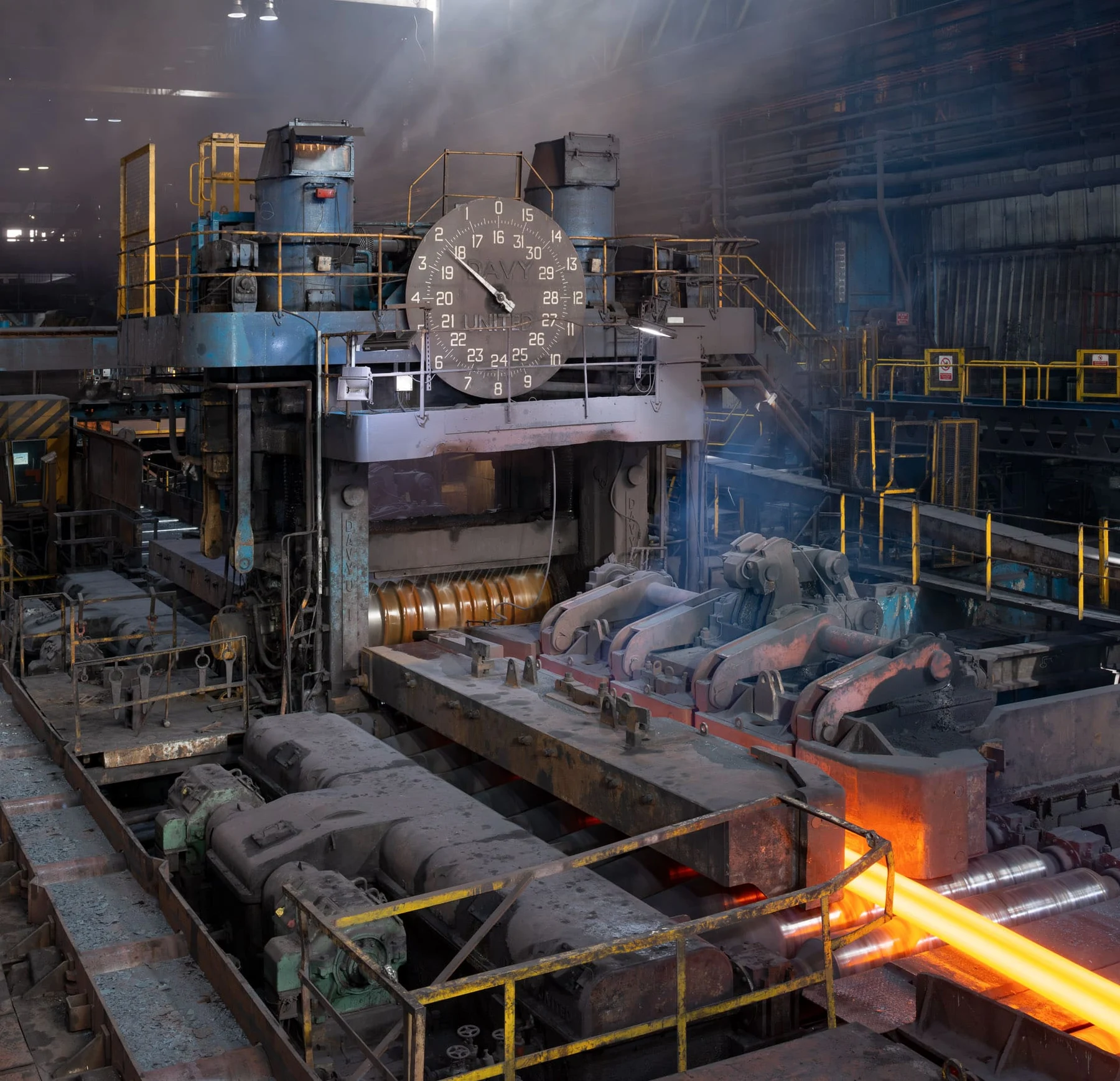
A second view of the rolling stand and material-handling arrangement, giving context for the operating sequences represented in the simulator.
Viktor Mácha / The Beauty of Steel ↗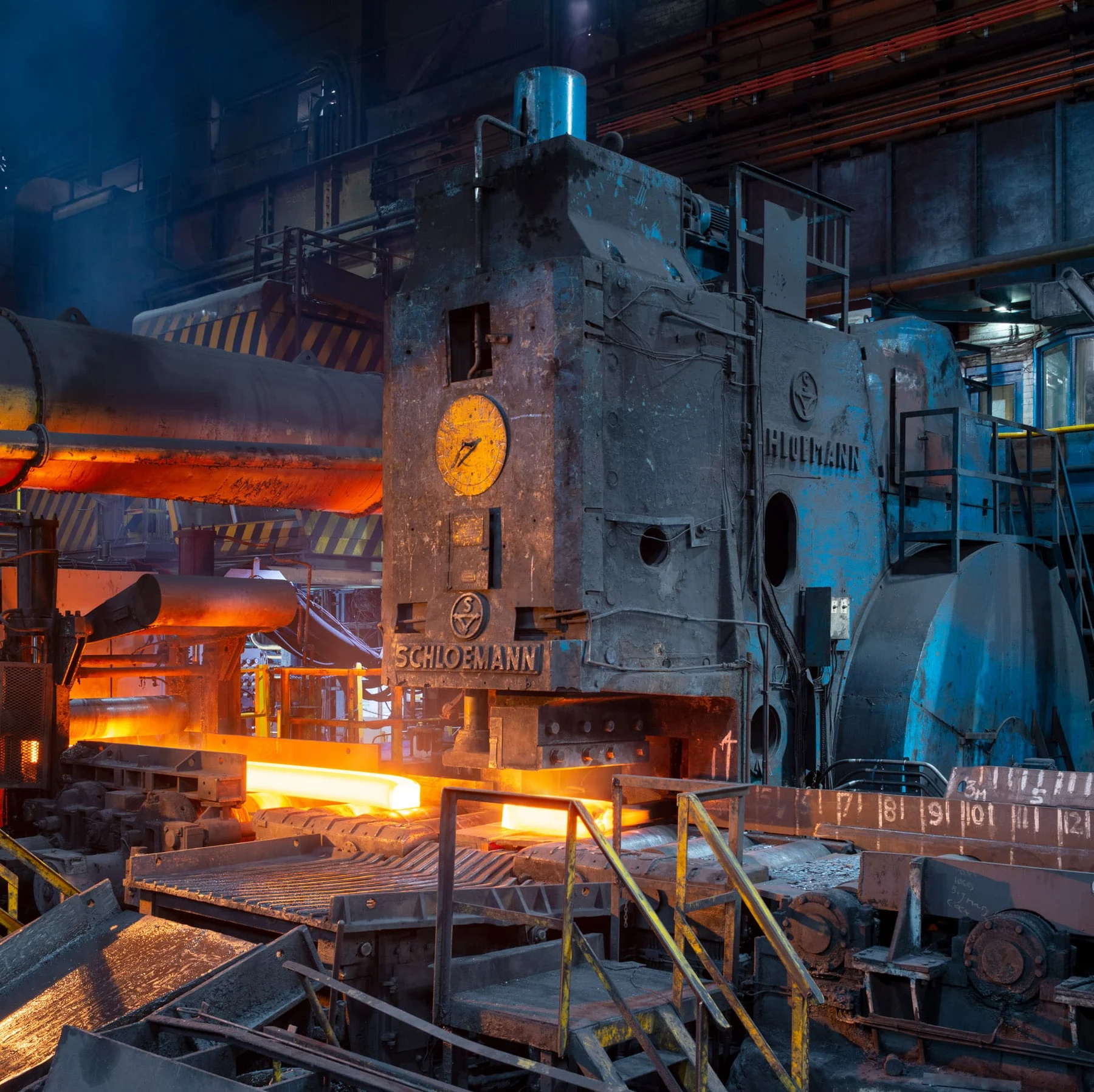
Equipment elsewhere in the rolling process illustrates the scale and interconnected nature of the plant environment we needed to understand.
Viktor Mácha / The Beauty of Steel ↗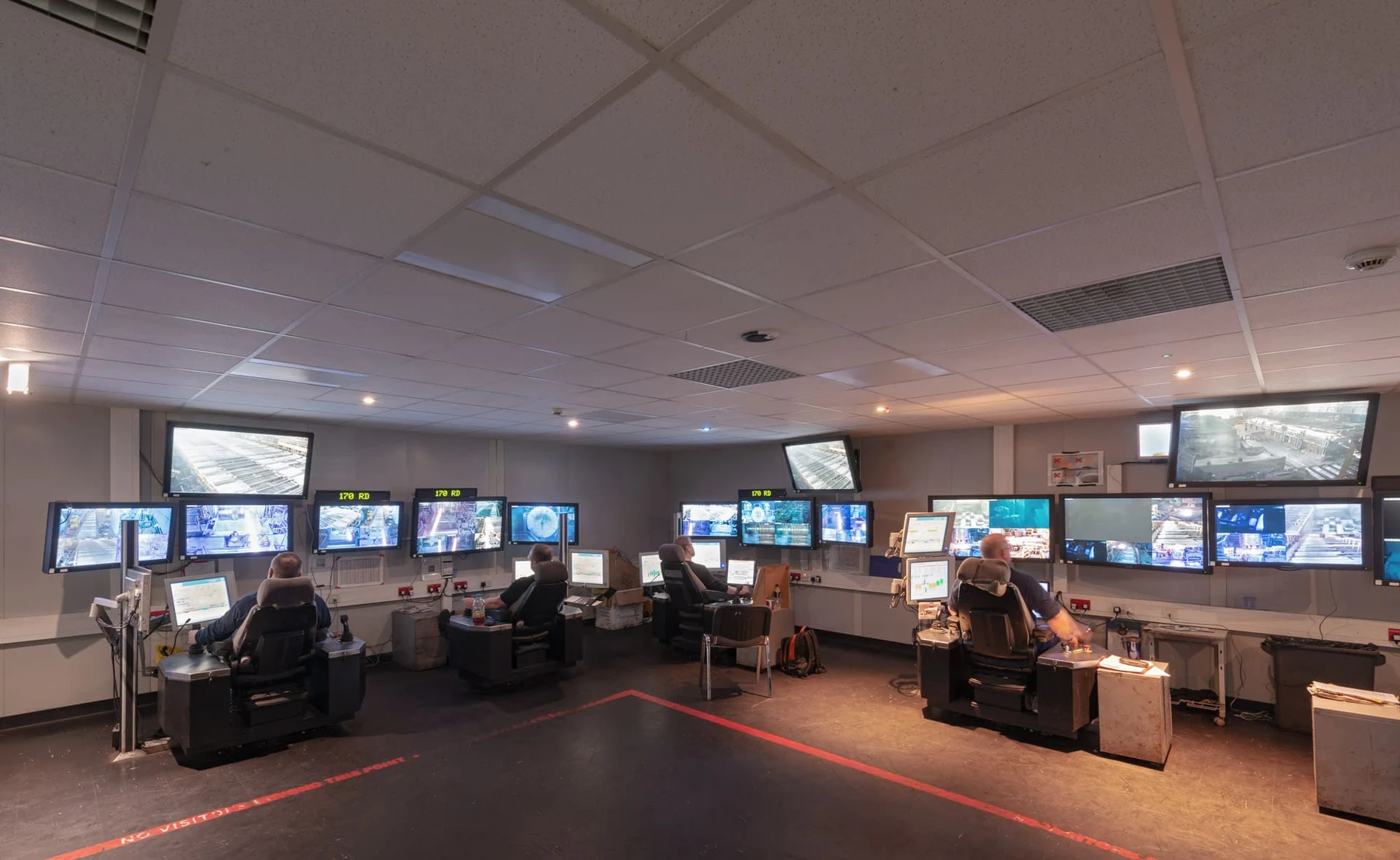
The control-room context behind the data-aggregation investigation, which aimed to make plant information easier to connect and interpret.
Viktor Mácha / The Beauty of Steel ↗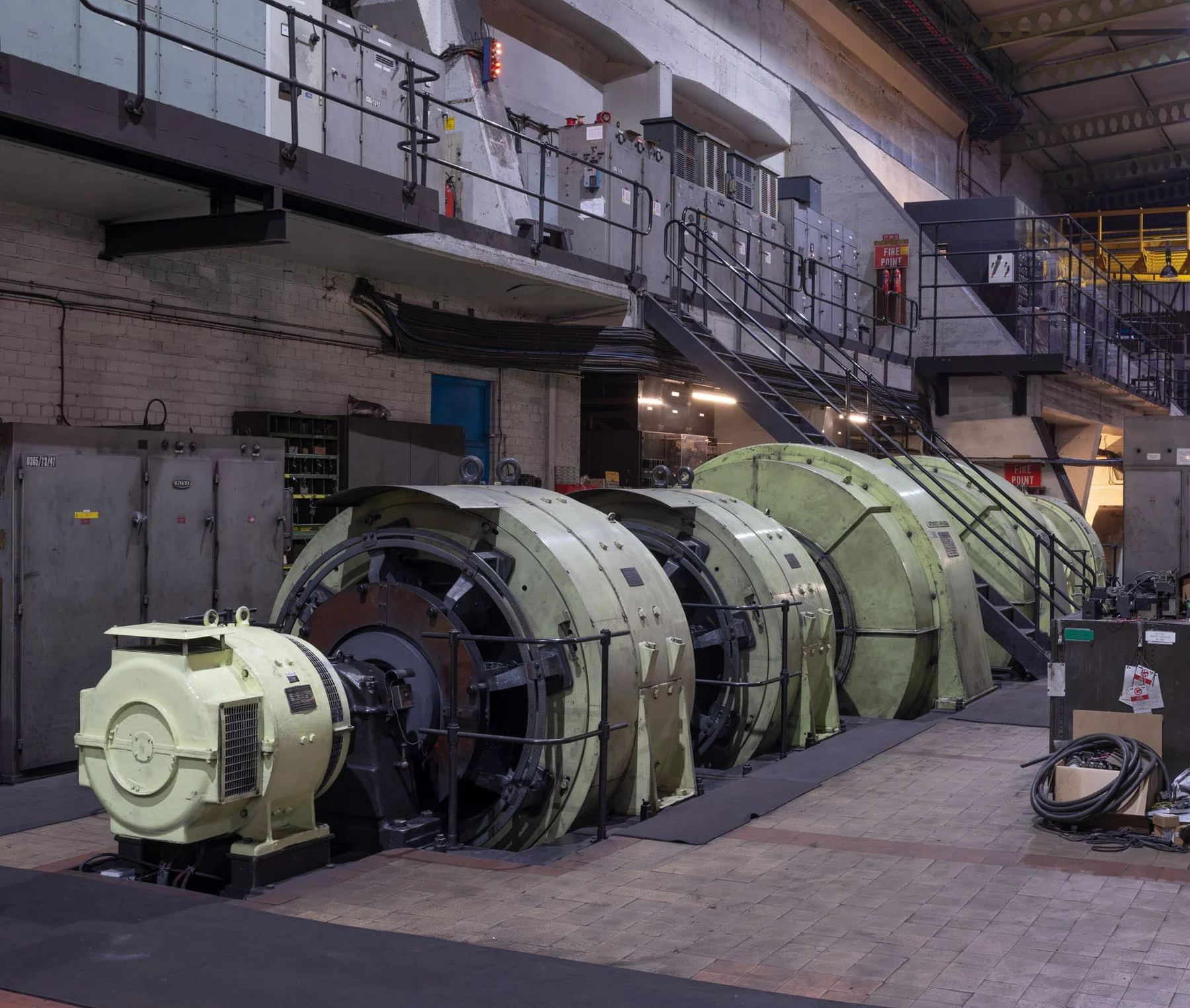
Legacy machinery and control infrastructure formed part of the wider brownfield digitalisation challenge.
Viktor Mácha / The Beauty of Steel ↗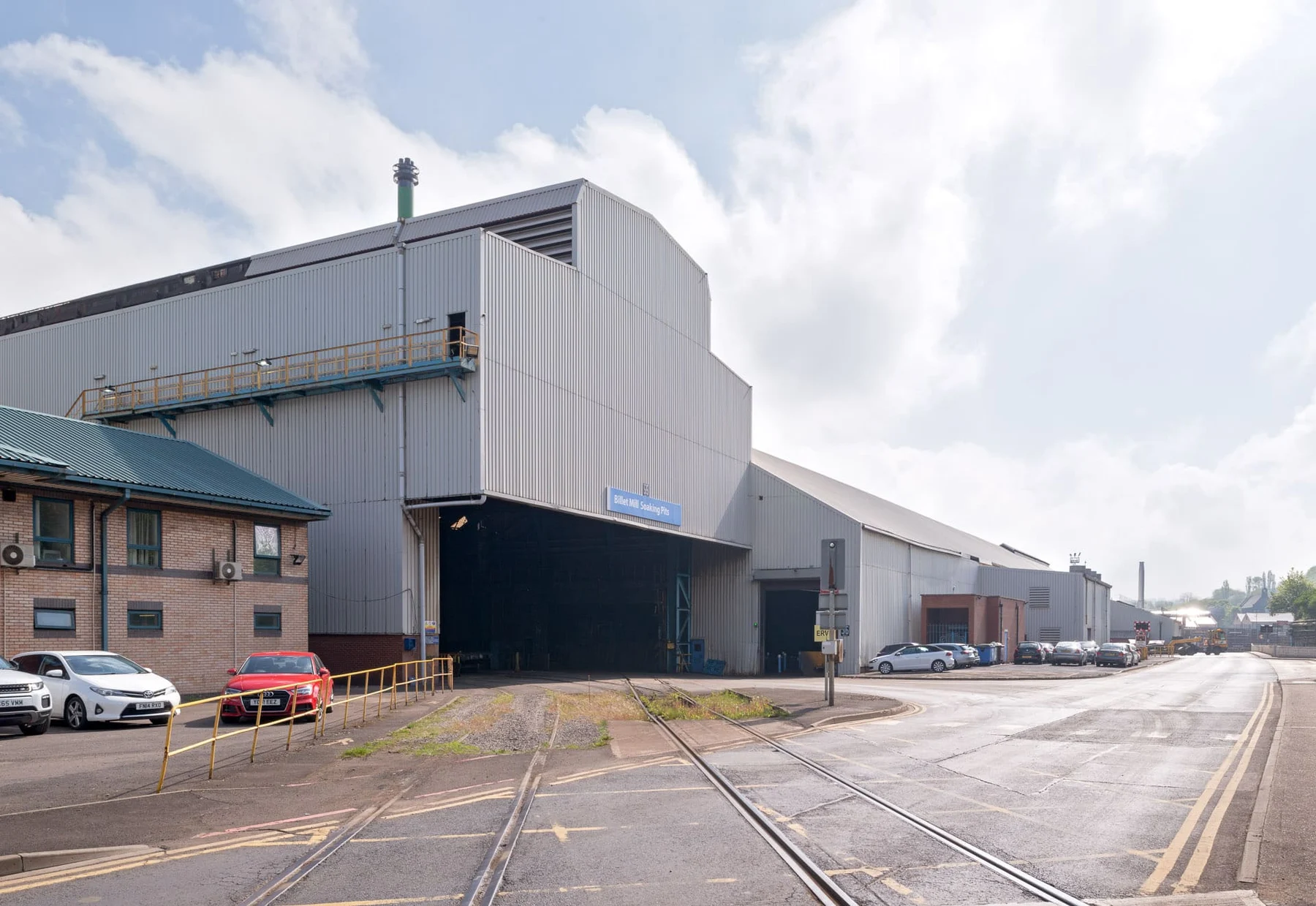
The physical setting for our site work, with the billet mill and soaking pits visible from the works road.
Viktor Mácha / The Beauty of Steel ↗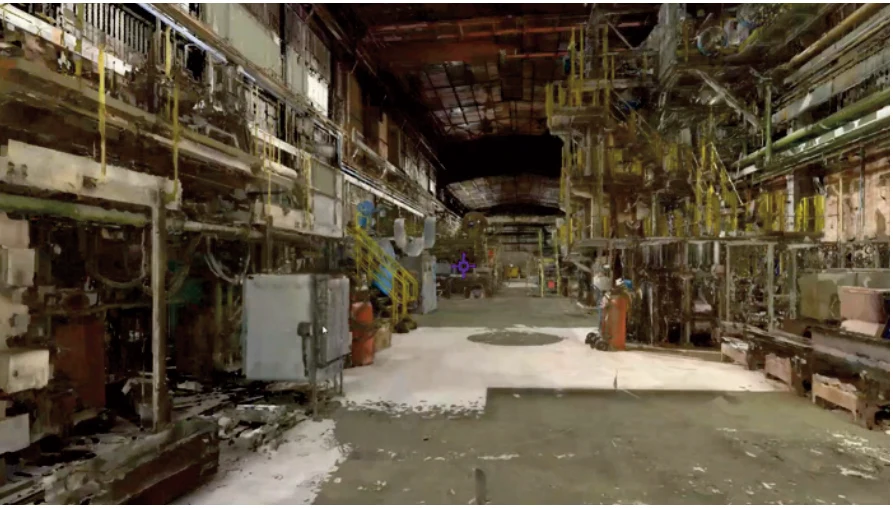
Related work at Normanton, a separate MPI site. The published paper identifies this as the navigable laser model created by TSC.
Materials Processing Institute, AG Taylor, 2021, Figure 5 ↗Further context
Technical references and related project information.
- TSC — Steel Industry Digitisation Project Underway, with the site team photograph ↗
- TSC’s June 2020 digital-twin programme announcement ↗
- MPI’s industrial digital technologies programme ↗
- The Manufacturer — £10m digital twin project to transform UK metals industry ↗
- UK Metals Expo — wider programme context ↗
- Stocksbridge photography by Viktor Mácha / The Beauty of Steel ↗