Client project / Highview Power
Highview Power BLU CRYOBattery.
Led 3D development and worked hands-on in Unity to connect Highview Power’s proposed Carrington plant with dynamic simulation and industrial controls.
Plant location / Satellite view
Open in Google Maps ↗Carrington CRYOBattery site
Carrington, Greater Manchester. Location of the proposed facility represented by the digital twin; system installation and integration took place at Highview’s London offices.
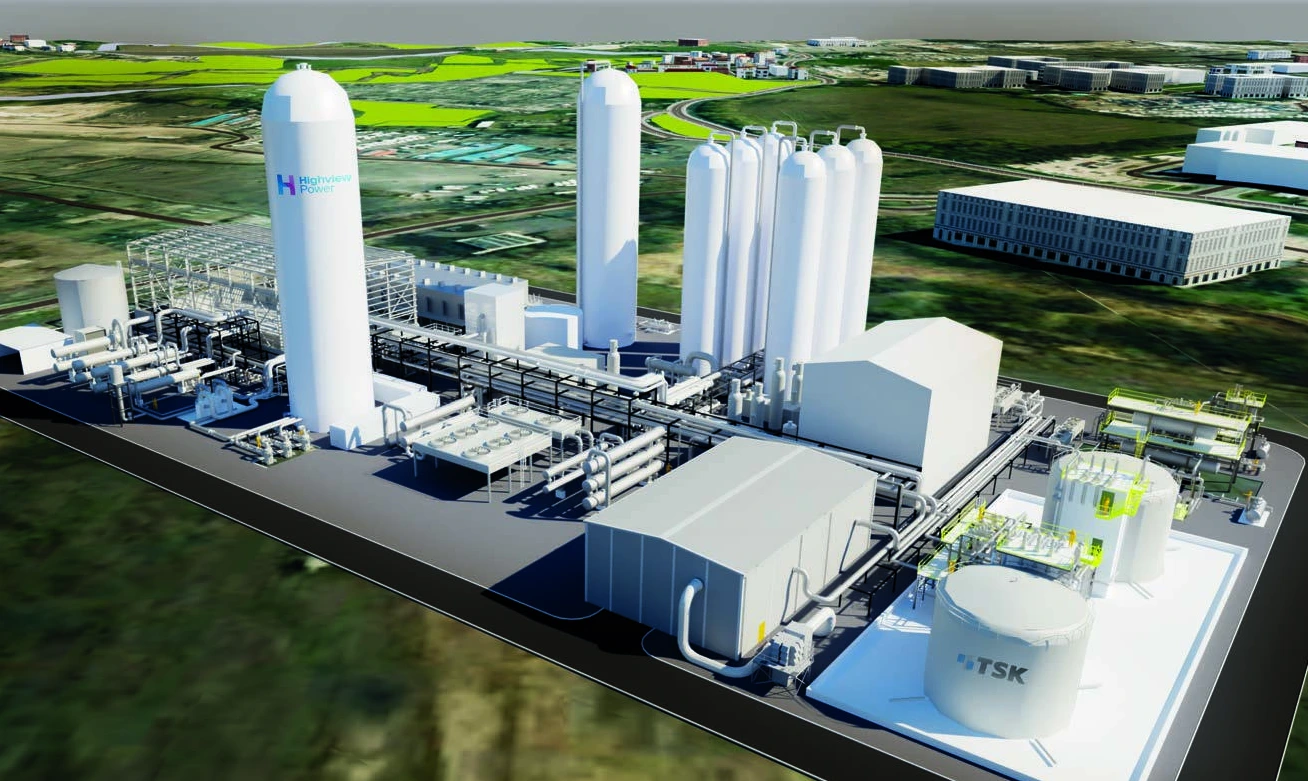
CRYOBattery concept rendering · TSK 2021 Annual Report, pages 10–11 ↗
An interactive model for a new energy-storage plant
I first came across Highview Power through the BBC’s November 2020 article, “UK energy plant to use liquid air”. I recognised an opportunity for our simulation work and prompted TSC’s marketing team to make a cold approach. Highview responded, and that outreach led to the digital-twin project.
Highview Power commissioned TSC Simulation to develop a digital twin for its proposed Carrington CRYOBattery facility. The project brought together a virtual plant walkaround, mathematical simulation and control-system emulation to support engineering verification, training and demonstrations to prospective investors.
The liquid-air energy-storage process uses electricity to liquefy air, stores it at cryogenic temperatures, and later expands it through turbines to generate power. The original Carrington scheme also included a Stability Island: generator-and-flywheel machinery intended to provide rapid grid-stabilisation services ahead of the wider storage installation.
From fragmented CAD to a navigable plant
As 3D Development Manager, I oversaw the build of the plant model from multiple, incomplete CAD datasets. I provided engineering knowledge and support to help the 3D artists reconcile those sources and model missing plant elements, bringing the geometry together into a single, usable virtual plant.
I reviewed the technical documentation and worked with the simulation team to keep the two representations aligned. Where possible, developments in the engineering simulation were reflected in the 3D model so that the visual environment remained consistent with the systems it represented.
I also worked directly in Unity, importing models, writing and maintaining Editor scripts, preparing collision geometry and integrating the scene. Hierarchical filtering and saved visibility views helped users isolate equipment or plant sections, while first- and third-person walking and flying modes made the facility easier to explore at different scales.
The model represented an evolving proposed design. Its purpose was to help people understand and interact with the facility during development.
Connecting 3D, simulation and controls
The system combined three layers: the 3D virtual plant for navigation and interaction; dynamic process and electrical simulation, with our simulated scope focused on the Stability Island; and industrial control integration through the Optimal-supplied BLU controller / Siemens PCS 7 demonstration arrangement.
Linking these layers brought the engineering behaviour and the visual environment into the same demonstration. It allowed stakeholders to explore the proposed plant alongside the simulation and control-system workflow.
I worked on site at Highview Power’s London offices to install the application, troubleshoot integration issues and help bring the linked 3D, simulation and controls setup into operation. This was integration of the demonstration system for the proposed facility.
My contribution
My involvement began with scoping the 3D software requirements alongside the customer and contributing to the proposal. During delivery, I connected the customer’s requirements with the work of the 3D artists and simulation engineers, combining technical review and engineering support with hands-on Unity development.
I coordinated and reviewed the modelling effort, helped maintain alignment between the simulation and visual model, and served as one of the main contacts for the client and automation partner. I also visited Carrington to understand the site context.
The project was delivered by TSC Simulation for Highview Power, working with Optimal Industrial Automation on the controls integration. My contribution was to help turn incomplete engineering geometry into an accessible virtual plant and carry that work through to a functioning integrated installation in London.
Project dates
The project began around June 2021 and was completed and delivered at the end of July 2022.
Equipment & operating context
A closer look.
The proposed CRYOBattery plant, published across pages 10–11 of TSK’s 2021 Annual Report. The two image halves have been joined into one view of the plant concept.
TSK, Memoria de actividades 2021, pages 10–11 (published 2022) ↗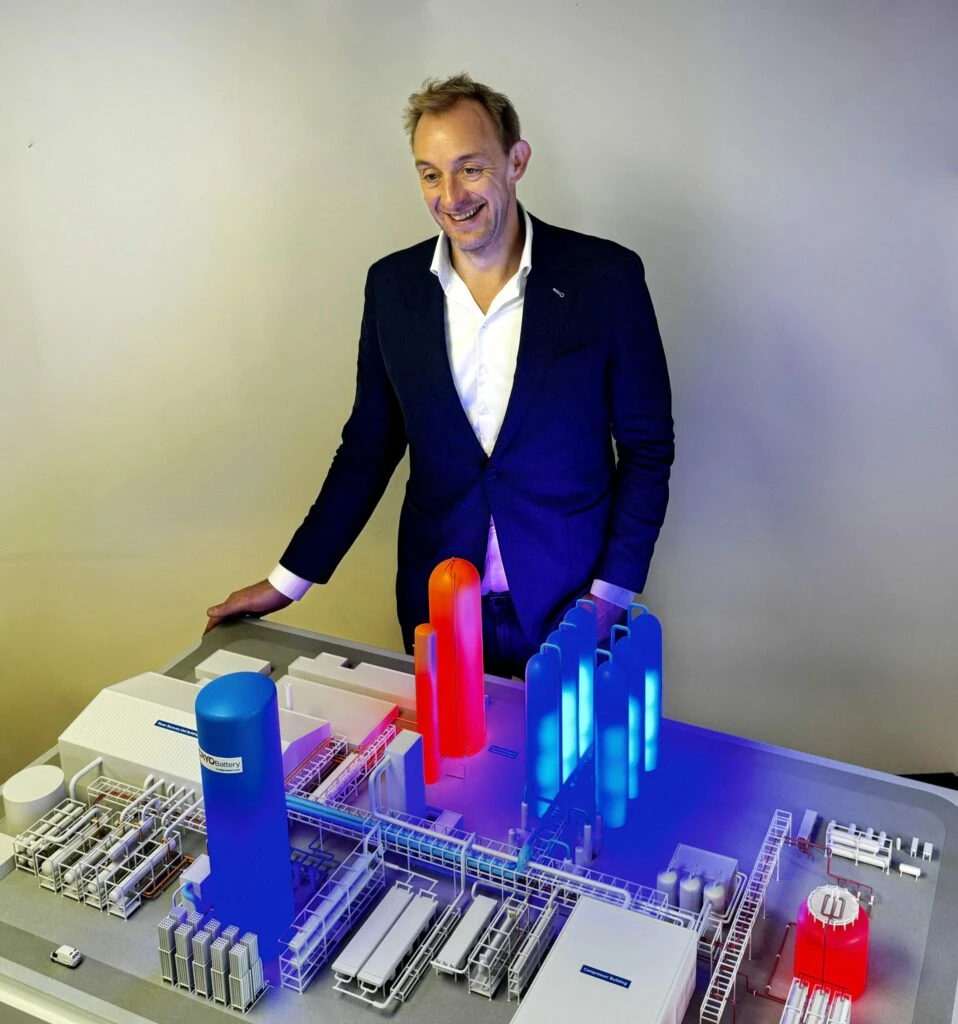
A physical plant model pictured in Highview Power’s June 2024 investment announcement. Its layout is very close to the facility we represented in 3D, with some design differences; the photograph is a later visual reference.
Highview Power, June 2024; photograph also published by PV Magazine ↗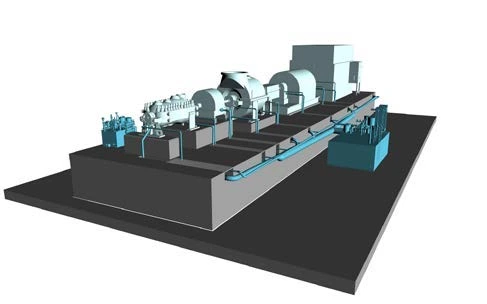
The proposed Stability Island generator-and-flywheel arrangement, providing context for the grid-stability simulation linked to the virtual plant.
MAN Energy Solutions, April 2021 press release, page 3 upper figure ↗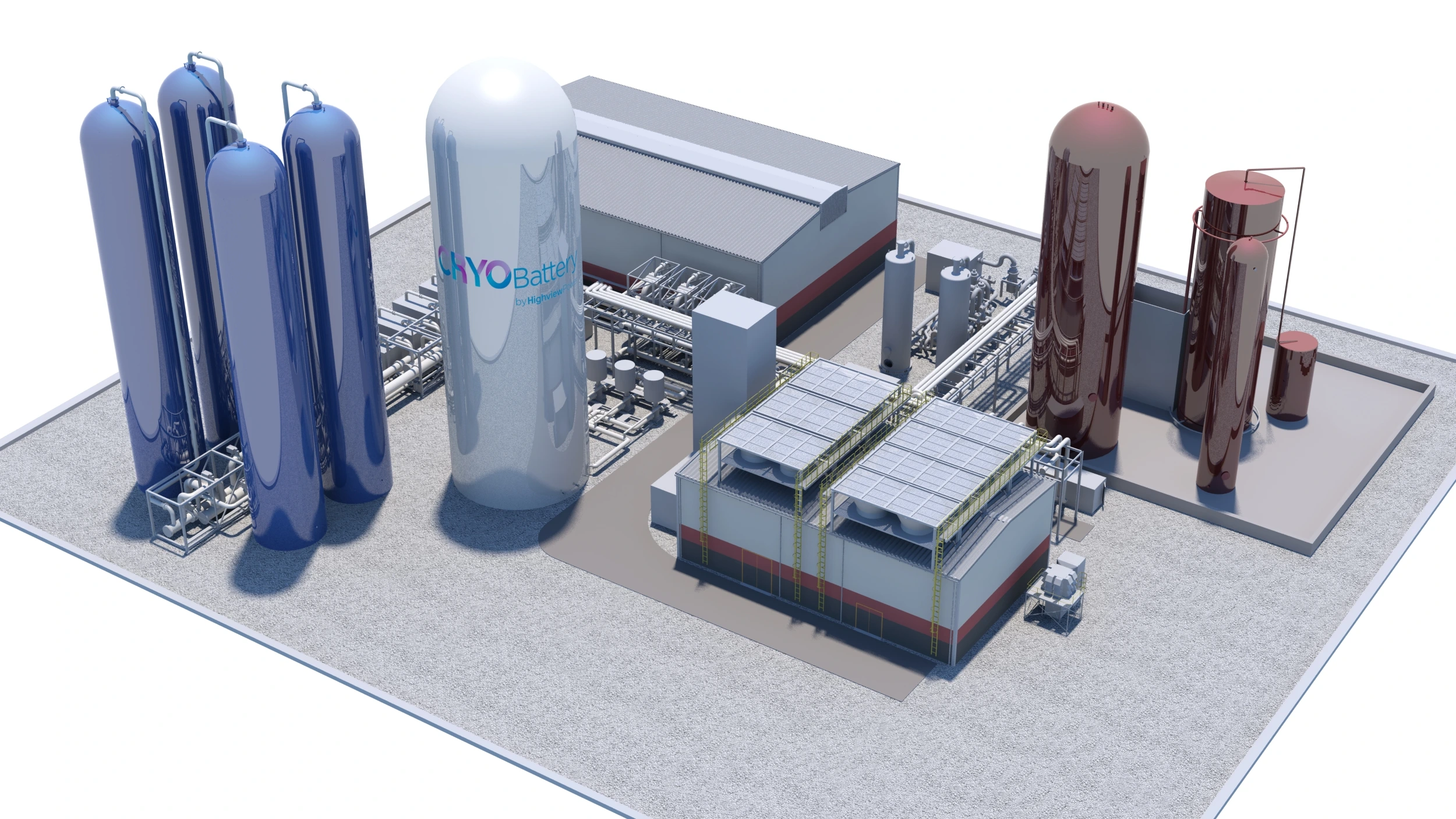
A project-era plant concept published by Optimal Industrial Automation alongside its account of the digital-twin and automation work.
Plant concept published by Optimal Industrial Automation, August 2022 ↗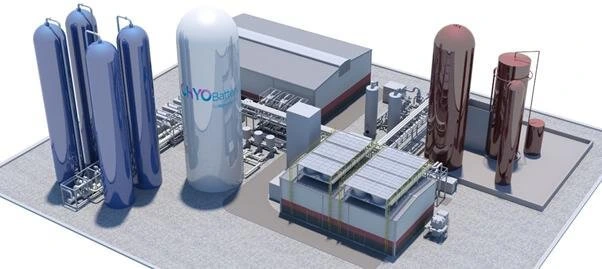
TSC’s September 2021 announcement used another version of the same historical plant concept. This is published reference artwork, rather than a screenshot of our Unity application.
Plant concept published by TSC Simulation, September 2021 ↗Public platform context
Further viewing.
TSK — earlier CRYOBattery concept
An earlier TSK concept film, included as supplementary background. It shows a different plant concept from the Carrington site represented in this case study.
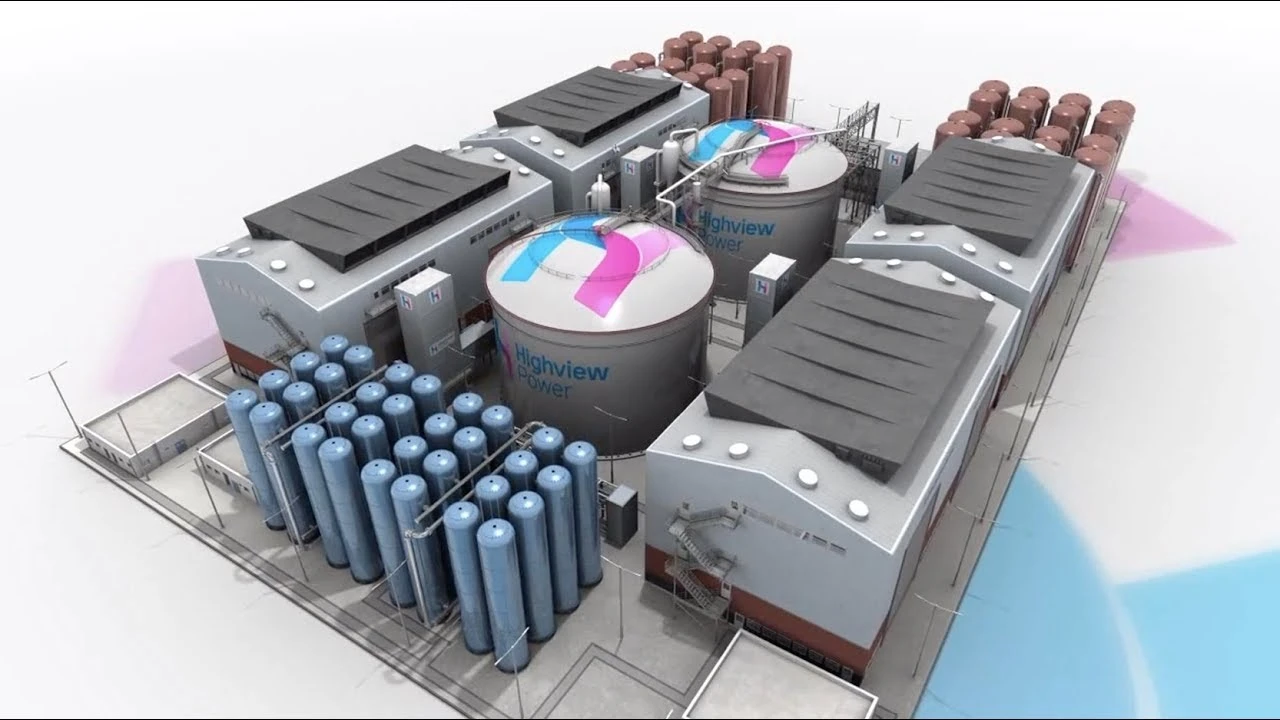
Loads YouTube only when you press play. Watch on YouTube ↗
Further context
Technical references and related project information.
- TSK — 2021 Annual Report, plant rendering on pages 10–11 (PDF) ↗
- Highview Power — UK commercial CRYOBattery announcement, October 2019 ↗
- BBC News — UK energy plant to use liquid air, November 2020 ↗
- Highview Power — £300m investment announcement and physical plant model, June 2024 ↗
- TSC Simulation — Blu CRYOBattery Project, September 2021 ↗
- Optimal Industrial Automation — Digital twins and energy storage, August 2022 ↗
- MAN Energy Solutions — Carrington LAES and Stability Island, April 2021 (PDF) ↗