Client project / Halliburton
Halliburton Surface Well Testing.
Led delivery of a reservoir-to-flare process simulator and shared 3D environment for remote onshore and offshore well-test training.
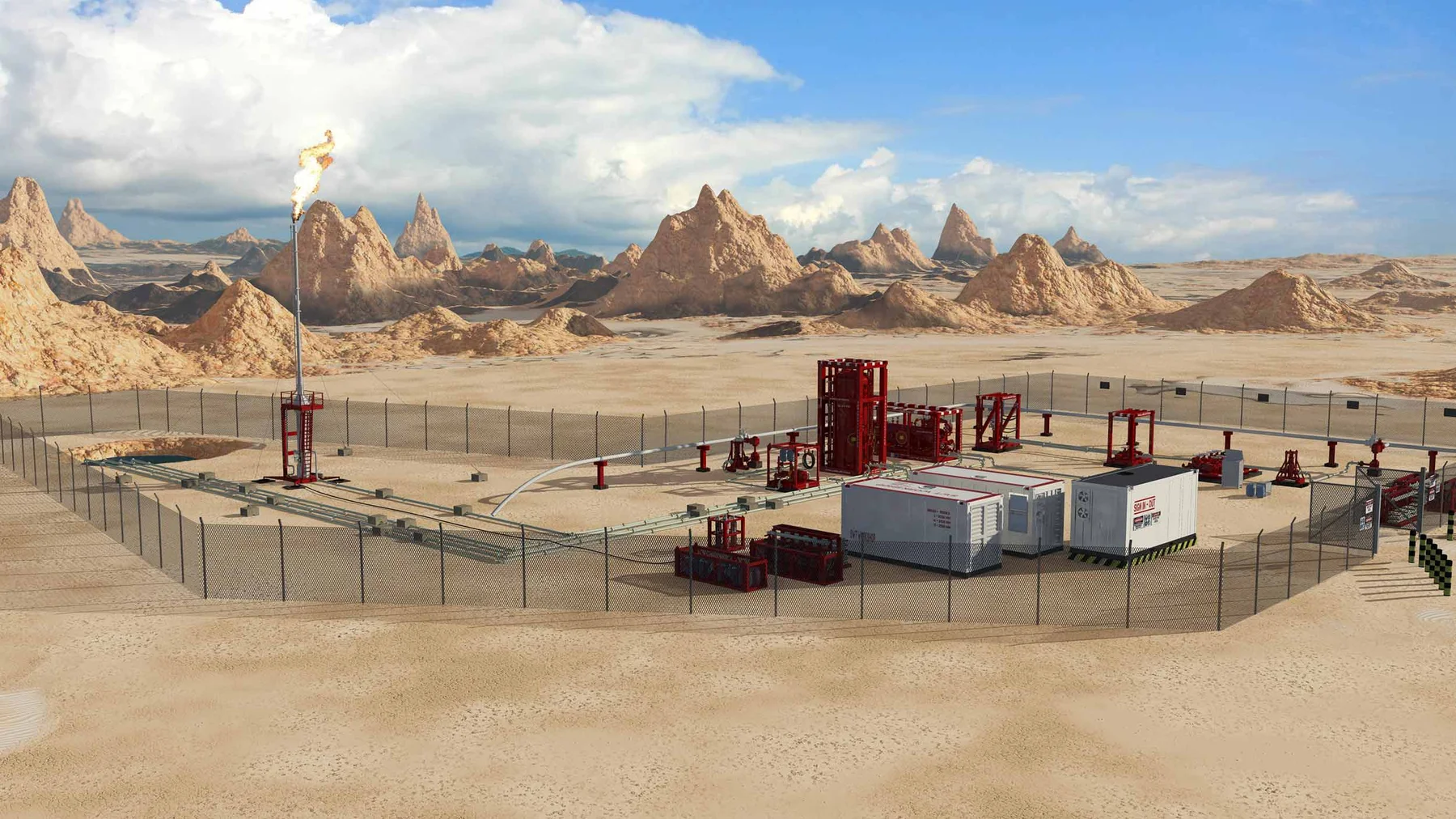
Image: Halliburton · reference visualisation ↗
Training a team spread across the world
Halliburton’s well-testing teams operate across South America, Southeast Asia and Australasia, in both onshore and offshore environments. Bringing a working crew of eight to ten people together for training creates a substantial travel, scheduling and cost challenge. The COVID-19 pandemic made that challenge particularly acute.
The project began around that period with a practical objective: connect a process simulator to an interactive, multiplayer 3D environment so teams could train together from different locations. The aim was to reduce dependence on travel and make team-based competency development easier to organise.
From reservoir to flare
I ran the initial project, which delivered both onshore and offshore training configurations. The layouts were based on real installations and designs of service, giving trainees a recognisable operational setting rather than a generic virtual plant.
The process model covered the system from the reservoir through the surface equipment to the flare. Trainees could carry out full perforation and well-test operations, connecting their actions in the 3D environment to the behaviour of the simulated process.
Emergency shutdown was part of that operating environment. All emergency shutdown systems within the simulated configurations were represented, including the pneumatic and hydraulic shutdown panels. This brought process behaviour, field equipment and protective systems into the same training exercise.
A shared operating environment
Multiplayer sessions hosted on AWS allowed participants in different locations to join the same training environment. That shared setting mattered because well testing is a team activity: the objective was to practise complete operations together, with the interactions and coordination that entails.
The engineering challenge was to connect a credible dynamic process model with an accessible visual environment. The 3D equipment needed to support the operating sequence, while the simulator needed to respond consistently as the team progressed through the exercise.
My contribution
I led the initial project and managed the customer relationship, translating operational training needs into a deliverable process-simulation and 3D solution. This work sat within my wider responsibilities for product ownership, solution architecture and multidisciplinary team delivery at TSC Simulation.
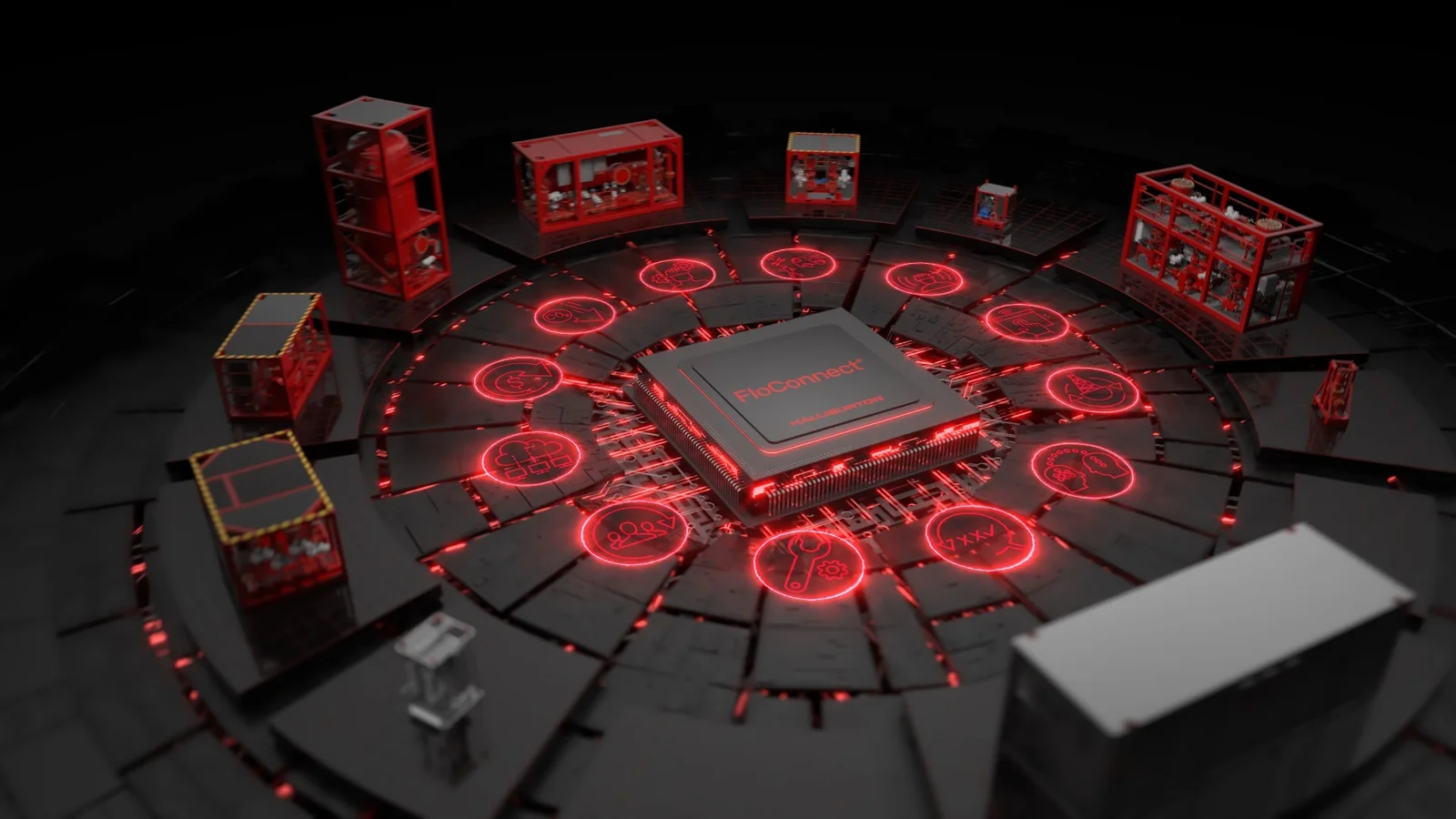
The relationship continued beyond the training delivery. Engagement with a separate Halliburton development team led to a new project focused on FloConnect engineering verification, using an upgraded simulator to test equipment and control-system workflows before physical testing.
Delivery phases and technical direction
The project ran May–December 2021. The onshore phase finished in October–November, followed by offshore delivery in November–December.
I instructed the 3D team on layouts and rig-ups and made visual and technical decisions throughout. I implemented aspects of the simulation/3D synchronisation logic, particularly around the pneumatic ESD panel, alongside extensive testing and customer engagement.
Customer projects
Related customer projects
Equipment & operating context
A closer look.
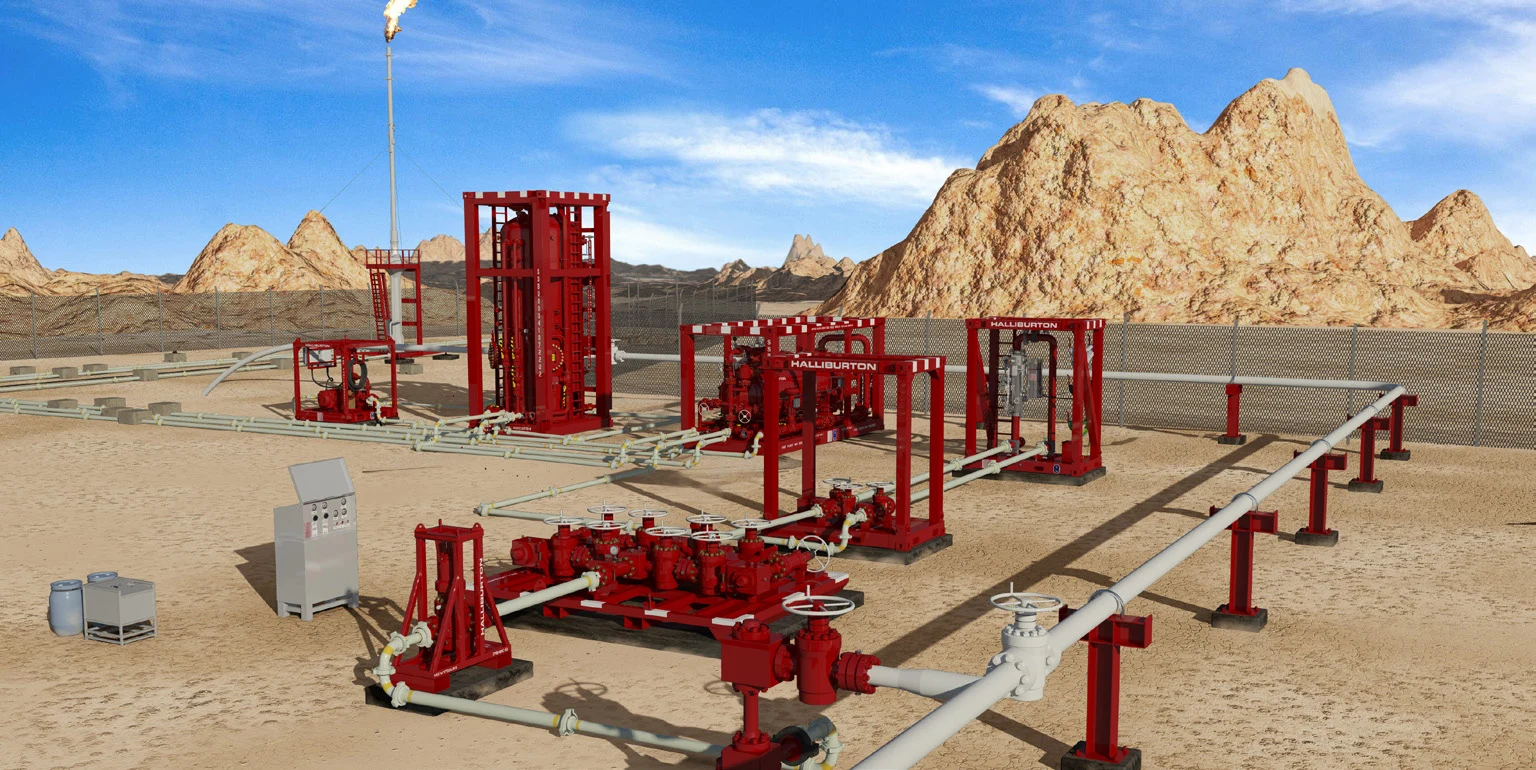
Halliburton’s published onshore layout, closely representative of the rig-up we modelled. Reference artwork rather than a screenshot of our training platform.
Halliburton, public EPF case study, page 1 ↗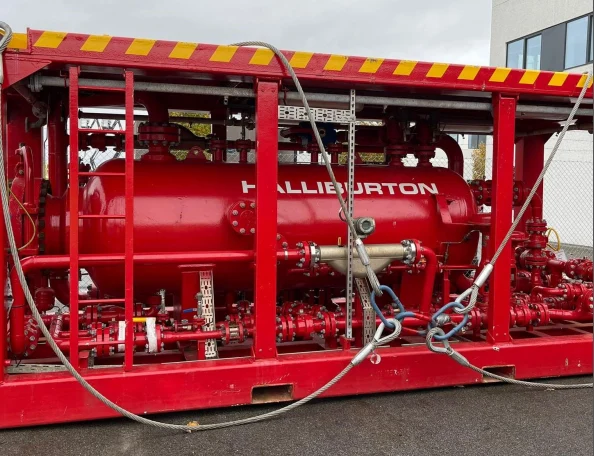
Physical well-test equipment provides the engineering context for the simulated process and field interactions.
Halliburton equipment photograph, supplied by Luke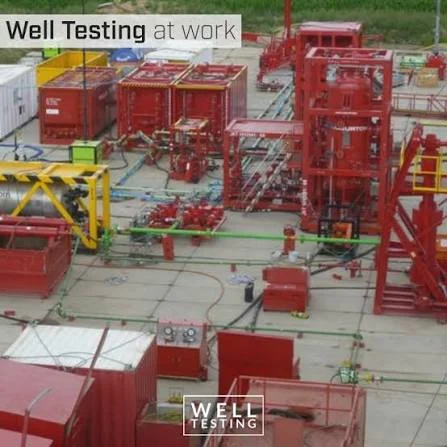
An offshore well-test rig-up illustrates the spatial and equipment context trainees need to understand as a team.
Halliburton well-testing image, supplied by Luke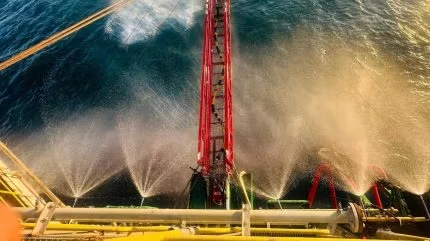
The simulation extended through the surface equipment to the flare, supporting complete well-test operating sequences.
Offshore operations photograph, supplied by Luke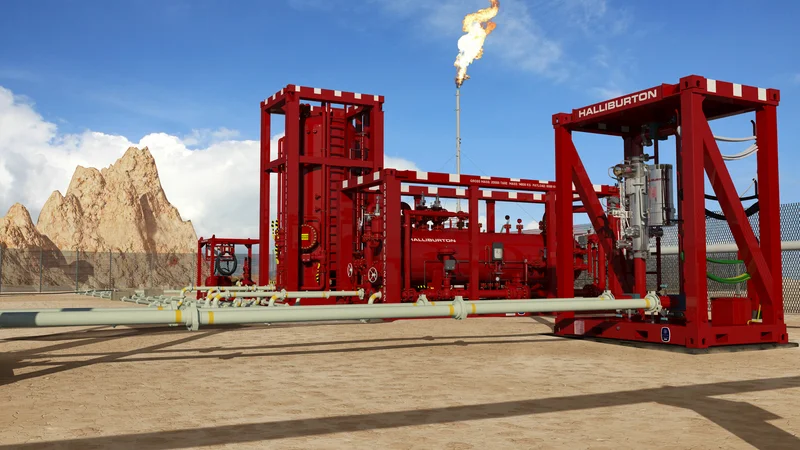
A second published view of an early production facility, showing the wider arrangement of a surface well-test spread.
Halliburton, Surface Well Testing page ↗Further context
Technical references and related project information.